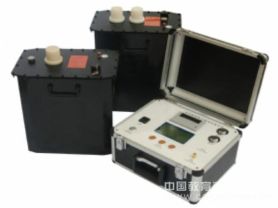
The mine environment is complex and variable, and the presence of stray current poses a potential threat to mine equipment and infrastructure. As a professional detection tool, the mine stray current tester can help technicians promptly identify and address stray current issues, thereby ensuring the safety and stability of mine production.
II. Working Principle and Technical Features
Working Principle
The mine stray current tester determines the presence and distribution of stray current by measuring the current density on or below the ground surface. The specific steps include:
Current Sensing: Uses devices such as current transformers or fluxgate sensors to detect current.
Data Acquisition: Records current density data.
Data Analysis: Analyzes the data through software to determine the location, intensity, and impact range of stray current.
Technical Features
High-Precision Measurement: Provides very high measurement accuracy, suitable for detecting micro currents.
Multifunctional Detection: In addition to measuring stray current, it can also detect electrical parameters such as voltage and resistance.
Portable Design: Typically compact and easy to carry for field use.
Easy Operation: Features a user-friendly interface that simplifies the operation process.
Data Recording and Analysis: Supports storage and export of test data for subsequent analysis.
III. Main Functions
Stray Current Detection: Precisely measures the presence and intensity of stray current.
Current Distribution Analysis: Helps determine the distribution of stray current and guides mitigation measures.
Fault Diagnosis: Identifies problems in the mine electrical system by analyzing stray current data.
Data Recording and Report Generation: Records test data and generates detailed analysis reports.
IV. Application Scenarios
The mine stray current tester is widely used in multiple areas of mines:
Mine Equipment: Detects stray current around mine equipment to prevent equipment corrosion.
Pipelines and Cables: Detects stray current near pipelines and cables in the mining area to avoid corrosion issues.
Infrastructure: Assesses the corrosion risk of mine infrastructure (such as metal supports, rails, etc.).
Safety Assessment: Conducts regular stray current detection to ensure the safety of mine production.
V. Usage Case
For example, in a certain mine, technicians used a mine stray current tester to detect cables in the mining area. By analyzing the data, they discovered abnormal stray current around some cables and accordingly took corresponding anti-corrosion measures, effectively preventing further damage to the cables.
VI. Development Trends
With technological advancements, mine stray current testers are developing in the following directions:
Intelligence: Integrating more intelligent analysis functions, such as automatic identification of fault types and locations, to improve detection efficiency.
Portability and Durability: More compact and durable designs suitable for use in various harsh environments.
Multifunctional Integration: In addition to stray current detection, it can also perform detection of multiple electrical parameters.
Remote Monitoring: Supports remote data transmission and analysis, enabling remote monitoring and management of equipment status.
VII. Conclusion
The mine stray current tester, as an important tool for ensuring safe production in mines, its role cannot be ignored. With continuous technological progress, such testers will become more intelligent, portable, and possess stronger data processing capabilities and remote monitoring functions, providing better guarantees for the safety and efficiency of mines.
This article provides an overview of the basic concepts, technical features, application scenarios, and future development trends of the mine stray current tester. The specific content can be further expanded or adjusted according to actual needs. If there are any specific requirements or topics that need further discussion, please feel free to let us know.