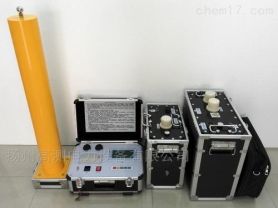

Partial discharge detector is a professional tool used to detect partial discharge phenomena in high-voltage electrical equipment. Partial discharge refers to the discharge phenomenon that occurs in local areas within the insulating material of high-voltage electrical equipment, which may be an early sign of insulation deterioration. Below is an overview of an article about partial discharge detectors, including their basic principles, characteristics, applications, and development trends.
Introduction to Partial Discharge Detector
A partial discharge detector is a professional testing tool mainly used to detect partial discharge phenomena in high-voltage electrical equipment. This detector can capture high-frequency pulse current signals generated by partial discharges, thereby helping technicians locate and assess potential problems in the equipment.
Basic Principles
The working principle of a partial discharge detector is based on the detection of high-frequency pulse currents. When partial discharge occurs in high-voltage electrical equipment under test voltage, the discharge pulse signal is sent to the input unit of the detector through a coupling capacitor. Subsequently, the signal is amplified by a low-noise preamplifier, filtered by a filter amplifier to select the desired frequency band, and finally amplified by a main amplifier to the required amplitude for display on the oscilloscope screen as visible discharge pulses. At the same time, these signals are also sent to a pulse peak meter to display their peak values.
Features and Functions
Multi-mode detection: Partial discharge detectors typically have multiple detection modes, such as high-frequency pulse current measurement (ERA method), transient earth voltage (TEV), ultra-high frequency (UHF), etc.
Portability: Most partial discharge detectors are handheld, making them easy to carry and operate on-site.
Data analysis: Modern partial discharge detectors integrate data acquisition and analysis functions, enabling rapid report generation.
Visualization: Discharge pulses are displayed on the oscilloscope screen, providing an intuitive representation of the discharge phenomenon.
Application Scope
Partial discharge detectors are widely used in power systems, electrical equipment manufacturing, scientific research institutions, and other fields, especially for detecting high-voltage electrical equipment such as GIS equipment, transformers, switchgear, and cable terminations.
Operating Procedure
Preparation stage: Select the appropriate input unit and coupling capacitor based on the characteristics of the equipment under test.
Connecting equipment: Connect the input unit to the equipment under test and ensure all connections are secure and reliable.
Voltage application test: Apply the test voltage to stimulate any potential partial discharge phenomena.
Signal acquisition: Capture the pulse signals generated by discharges and amplify them through amplifiers.
Data analysis: Observe the discharge pulses on the oscilloscope, record peak values, and analyze them.
Development Trends
With technological advancements, partial discharge detectors are moving towards higher precision and greater intelligence. Future partial discharge detectors will place more emphasis on real-time monitoring and remote monitoring capabilities to facilitate early detection and prevention of potential insulation problems.
Conclusion
Partial discharge detectors are one of the indispensable tools in power system maintenance. Through regular testing, partial discharge issues in equipment can be detected and resolved in a timely manner, thereby effectively ensuring the safe and stable operation of the power system. With continuous technological progress, future partial discharge detectors will become more efficient and intelligent, providing strong support for the sustainable development of the power industry.
I hope this article helps you better understand the relevant knowledge about partial discharge detectors. If you need more detailed information or have other questions, please feel free to let me know.