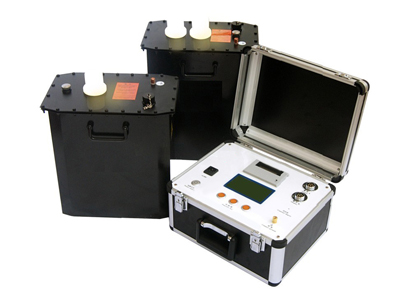


is a professional device used to detect partial discharge phenomena in power equipment. These devices utilize ultrasonic signals to identify and locate potential faults in power equipment, thereby assisting maintenance personnel in taking timely measures to prevent accidents. The following is an overview of an article about the ultrasonic partial discharge inspection and locating instrument:
Ultrasonic Partial Discharge Inspection and Locating Instrument
Introduction
The health condition of power equipment directly affects the stability and safety of the power grid. As an important part of preventive maintenance, partial discharge detection can identify insulation problems in equipment at an early stage, helping maintenance personnel take timely measures to avoid major accidents.
Product Overview
Name: Ultrasonic Partial Discharge Inspection and Locating Instrument
Model: GCJF 901 / HDJF-9001 / MD9001, etc.
Manufacturer: [Specific manufacturer name]
Main Features
Non-contact detection: Can perform detection without contact with live equipment.
High sensitivity: Can detect weak ultrasonic signals.
Versatility: Suitable for detection of various power equipment.
Portable design: Lightweight and easy to carry, suitable for on-site inspections.
Accurate positioning: Can precisely locate the position of partial discharge.
Strong anti-interference: Can work normally in complex electromagnetic environments.
Working Principle
The ultrasonic partial discharge inspection and locating instrument detects by receiving ultrasonic signals generated during partial discharge in power equipment. Since partial discharge is accompanied by high-frequency ultrasonic signals (usually above 20kHz), these signals can be captured by special sensors. After the internal sensors receive these signals, they are analyzed and processed by the built-in electronic processing unit, thereby determining the presence or absence of partial discharge and its approximate location.
Technical Parameters
Frequency range: Usually 20kHz to 100kHz
Sensitivity: Can detect extremely weak ultrasonic signals
Positioning accuracy: Usually up to a few centimeters
Display: Color LCD display for easy observation of signal strength and waveform
Battery life: Usually continuous use for several hours
Weight: Lightweight and easy to carry
Usage Steps
Power-on preparation: Turn on the device and perform initialization settings according to the operation manual.
Equipment scanning: Scan different parts of power equipment, such as high-voltage cable terminations, insulators, open equipment in substations, dry-type transformers, etc.
Signal analysis: Observe the signal strength and waveform changes on the display to analyze whether there is partial discharge.
Fault location: If partial discharge is detected, use the built-in functions of the device to locate the fault source.
Data recording: Record detection results, including signal strength, waveform diagrams, and fault location information.
Application Scenarios
High-voltage cables: Detect partial discharge at cable terminations, intermediate joints, and other parts.
Substations: Detect transformers, circuit breakers, disconnectors, and other equipment in substations.
Transmission lines: Detect partial discharge at transmission towers, conductors, and other parts.
Distribution equipment: Detect distribution cabinets, switchgear, and other equipment.
Maintenance and Care
Regular calibration: Ensure detection accuracy.
Cleaning: Wipe the exterior of the instrument with a soft cloth.
Storage: Store in a dry and ventilated place.
Safety Precautions
Read before operation: Please read the user manual carefully.
Protective measures: Wear necessary personal protective equipment.
Avoid electric shock: Avoid contact with live parts during testing.
Conclusion
The ultrasonic partial discharge inspection and locating instrument is an efficient and reliable health monitoring tool for power equipment, helping maintenance personnel detect partial discharge problems in equipment in a timely manner, thereby improving the safety and reliability of the power system.
The above is a typical article overview of the ultrasonic partial discharge inspection and locating instrument. Specific product features and parameters may vary depending on the manufacturer and model. If you need detailed information about a specific model, please provide the specific model name or other relevant information.