
Single-Channel Partial Discharge Tester: A Practical Tool for Partial Discharge Detection
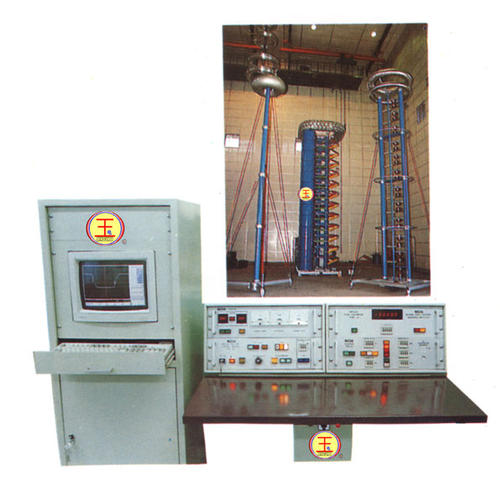
Partial Discharge (PD) refers to a discharge phenomenon that occurs in certain parts of insulating materials when the applied voltage is sufficiently high in high-voltage power equipment. Although this phenomenon does not immediately cause insulation failure, its long-term presence gradually weakens insulation performance and may eventually lead to equipment failure. Therefore, the detection of partial discharge is crucial for preventive maintenance of power equipment. The single-channel partial discharge tester is a commonly used detection tool for monitoring the insulation status of high-voltage equipment.
Working Principle
The single-channel partial discharge tester works by detecting signals such as electromagnetic waves, acoustic waves, or electrical pulses generated by partial discharge. Typically, the tester includes the following key components:
- Preamplifier: Used to capture and amplify weak discharge signals transmitted from high-voltage equipment.
- Filter: Selects signals within a specific frequency range to eliminate interference.
- Main Amplifier: Further amplifies the signal to a detectable level.
- Display Unit: Displays graphical and numerical information of discharge pulses.
Usage Method
- Power-on Preparation: Set the tester to the appropriate mode, usually the elliptical display mode.
- Calibration: Use a calibration pulse generator for calibration to ensure test accuracy.
- Connect Equipment: Disconnect the calibration connection line and connect to the high-voltage equipment under test.
- Voltage Increase Test: Gradually increase the test voltage and observe discharge pulse signals.
- Adjust Amplifier: When discharge pulses are detected, adjust the amplifier so that the height of the discharge pulses is between 0.2 and 2 cm.
- Data Recording: Record discharge quantity and related parameters.
Precautions
- Safety First: All relevant safety regulations must be followed during testing.
- Environmental Factors: Minimize electromagnetic interference in the environment to avoid affecting test results.
- Correct Calibration: Calibrate before each use to ensure measurement accuracy.
- Voltage Control: Increase voltage slowly to avoid sudden voltage jumps that may cause unnecessary discharge.
- Professional Training: Operators should receive appropriate training and be familiar with the equipment operation procedures.
Application Fields
The single-channel partial discharge tester is widely used in various fields of the power system, for example:
- Transformers: Monitor the insulation status of windings.
- Cables: Detect partial discharge in cable terminations and intermediate joints.
- High-Voltage Switchgear: Inspect the insulation condition inside switchgear cabinets.
- Gas-Insulated Switchgear (GIS): Monitor partial discharge activity inside GIS.
Conclusion
The single-channel partial discharge tester is a key tool for evaluating the insulation status of power equipment. Through regular partial discharge detection, equipment failures can be effectively prevented, equipment life extended, and the safe and reliable operation of the power system ensured. With technological advancements, future partial discharge testers will become more portable and intelligent, providing more accurate and comprehensive detection results.