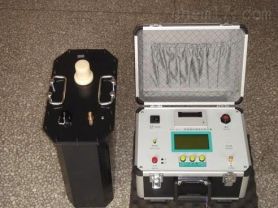
High voltage generators are devices capable of producing high voltage output, widely used in various fields including but not limited to scientific research, industrial manufacturing, medical equipment, and power system testing. They convert the energy from the input power supply into high voltage output to meet the needs of specific application scenarios. According to different technical principles and application purposes, high voltage generators can be classified into various types.
Working Principle
The core of a high voltage generator lies in how to efficiently and safely increase the voltage level. Common implementation methods include:
Transformer method: Utilizes the principle of electromagnetic induction to increase voltage through the turns ratio between the primary and secondary coils. This is the most traditional and common method of generating high voltage.
Voltage multiplier rectifier circuit: Suitable for situations requiring DC high voltage output, it gradually increases the voltage level by connecting multiple capacitors and diodes in series to form a voltage multiplier rectifier circuit.
Pulsed power technology: For application scenarios requiring extremely high voltage for short durations, such as in lasers or particle accelerators, energy storage elements (like capacitors) are used to rapidly release energy to generate instantaneous high voltage.
Application Fields
Scientific Research:
In physics research, it is used to accelerate charged particles, supporting nuclear physics experiments, material analysis, and more.
As a standard source in laboratories, it is used to calibrate other measuring instruments.
Industrial Manufacturing:
Surface treatment, such as electrostatic spraying, ensures uniform coating adhesion on workpiece surfaces.
Material testing, evaluating the performance of insulating materials under high voltage conditions.
Medical Equipment:
Medical imaging devices such as X-ray machines rely on high voltage generators to produce the required radiation energy.
Physical therapy equipment may also involve high voltage applications ranging from low to medium voltage levels.
Power System Testing:
Testing the insulation performance of power systems to prevent potential safety hazards.
Conducting partial discharge tests to assess the health status of high voltage electrical equipment.
Design and Safety Considerations
Safety issues must be considered when designing high voltage generators, as high voltage can pose electric shock risks, fire hazards, and interference with surrounding electronic devices. Therefore, the following points should be noted during design:
Insulation protection: Ensure all conductive parts are adequately insulated to avoid accidental contact.
Overload protection: Equip with appropriate protective mechanisms, such as fuses or circuit breakers, to prevent damage caused by excessive current.
Grounding measures: Good grounding design helps to quickly dissipate abnormal charges and reduce danger.
Conclusion
As a key technological equipment, high voltage generators play an indispensable role in the development of modern technology. With the advancement of science and technology, the design of high voltage generators is continuously evolving towards higher efficiency and safety. Whether in basic scientific research or industrial production practice, high voltage generators provide strong support, driving innovation and development in various fields. Understanding their basic working principles and application scope helps in better selecting and using such equipment, while also promoting further exploration and development in related fields.