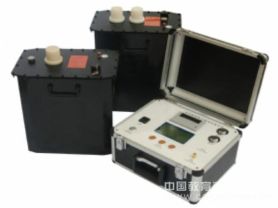
In the fields of power systems and electronic engineering, series resonance is a very important phenomenon. It not only affects the working efficiency and performance of circuits but also plays a significant role in many practical applications. This article will detail the basic concepts, working principles, characteristics, and wide-ranging applications of series resonance.
1. What is series resonance?
Series resonance refers to a phenomenon in a series circuit composed of an inductor (L), a capacitor (C), and a resistor (R), where at a specific frequency, the total impedance of the circuit reaches its minimum value and the current reaches its maximum value. This specific frequency is called the resonant frequency. At the resonant frequency, energy exchange occurs between the inductor and the capacitor, while the resistor consumes energy.
2. Working principle
Basic formula:
In an idealized RLC series circuit, its total impedance
Characteristics at resonance:
At the resonant frequency, the total impedance of the circuit is only determined by the resistor
V is the applied voltage).
Due to the energy exchange between the inductor and the capacitor, the entire circuit appears almost purely resistive, meaning that the voltage and current are in phase.
3. Characteristics and advantages
High-efficiency transmission: In the resonant state, the circuit can transmit power with maximum efficiency, which is particularly important for fields such as radio communication.
Filtering function: Series resonant circuits can be used as band-pass filters, allowing signals of a specific frequency to pass through while suppressing other frequency components.
High Q-value effect: In certain cases, such as resonant circuits with a high quality factor (Q value), a very high output voltage can be generated from a small input voltage, which is very useful in amplifier design.
4. Application scenarios
Radio receivers: Utilize series resonance to select specific broadcast frequencies, thereby achieving selective channel reception.
Power inverters: Used to improve the efficiency of inverters and reduce unnecessary energy losses.
Testing equipment: In laboratories, series resonant circuits are often used to precisely measure inductance or capacitance values.
Industrial heating: For example, in induction heating equipment, adjusting to the resonant frequency can maximize energy transfer efficiency.
5. Summary
Series resonance is not only one of the fundamental knowledge points for understanding circuit behavior but also the core of many modern technologies and applications. Whether it is optimizing the performance of wireless communication systems or improving the efficiency of industrial heating equipment, mastering the principles of series resonance and its applications can bring significant technical advantages. With the development of technology, the application scenarios of series resonance will become even more extensive, and its impact on various industries will deepen day by day. Understanding and rationally utilizing this physical phenomenon is crucial for engineers and technical personnel. Professional manufacturers such as Yangzhou Dary Electric Co., Ltd. provide related products and services, which are based on the understanding of these basic principles and continuous innovation in technology, offering strong support to customers.