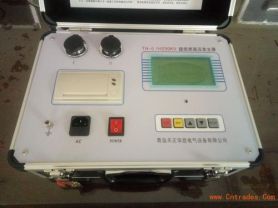
As an important component in the power system, cables undertake the task of transmitting electrical energy. However, due to manufacturing defects, improper installation, or aging caused by long-term operation, cables may experience various faults such as open circuits, short circuits, and grounding issues. The cable fault tester is a professional device specifically designed to diagnose these problems, playing a crucial role in power maintenance and repair.
Working Principle of Cable Fault Tester
The cable fault tester locates fault points by applying specific electrical signals to the cable and detecting the signal propagation along the cable. Depending on the technology used, testers can be classified into the following types:
Low-Pulse Method (LPM): Sends low-voltage pulses into the cable and determines the fault type and location based on the reflected pulse waveform. This method is suitable for finding simple faults such as open circuits and short circuits.
Flashover Method: For high-impedance faults or complete breakdowns, high-voltage pulses are used to cause a flashover at the fault point, and the fault location is determined by measuring the flashover time.
Audio Induction Method: Applies an audio signal to the cable, then uses an induction probe along the cable path to find the point with the strongest signal, thereby locating the exact position of the cable or fault point.
Secondary Pulse Method: Combines the advantages of low-voltage and high-voltage pulses. First, a low-voltage pulse is used to obtain an initial reading, then a high-voltage pulse causes a flashover at the fault point, resulting in more accurate fault location.
Main Functions
Fault Location: Quickly and accurately locate breakpoints, short circuits, or grounding fault points in cables.
Cable Identification: Distinguish target cables among multiple cables.
Path Tracing: Trace the actual laying path of cables.
Cable Length Measurement: Measure the total length of cables.
Application Fields
Cable fault testers are widely used in various fields of the power system, including but not limited to:
Power Companies: Used for grid maintenance to ensure the normal operation of the power system.
Construction Industry: Ensure correct cable installation during internal wiring of buildings.
Manufacturing: Play a role in cable maintenance and fault troubleshooting of production equipment.
Transportation: Cable fault detection in facilities such as subways and railways.
Usage Method
Preparation: Ensure the cable is de-energized and take necessary safety measures.
Select Test Mode: Choose the appropriate test method based on the type of cable fault.
Apply Signal: Apply the corresponding electrical signal to the cable according to the selected method.
Read Results: Read the fault location information from the tester's display.
Fault Handling: Carry out repair work at the fault point based on the test results.
Practical Application Case
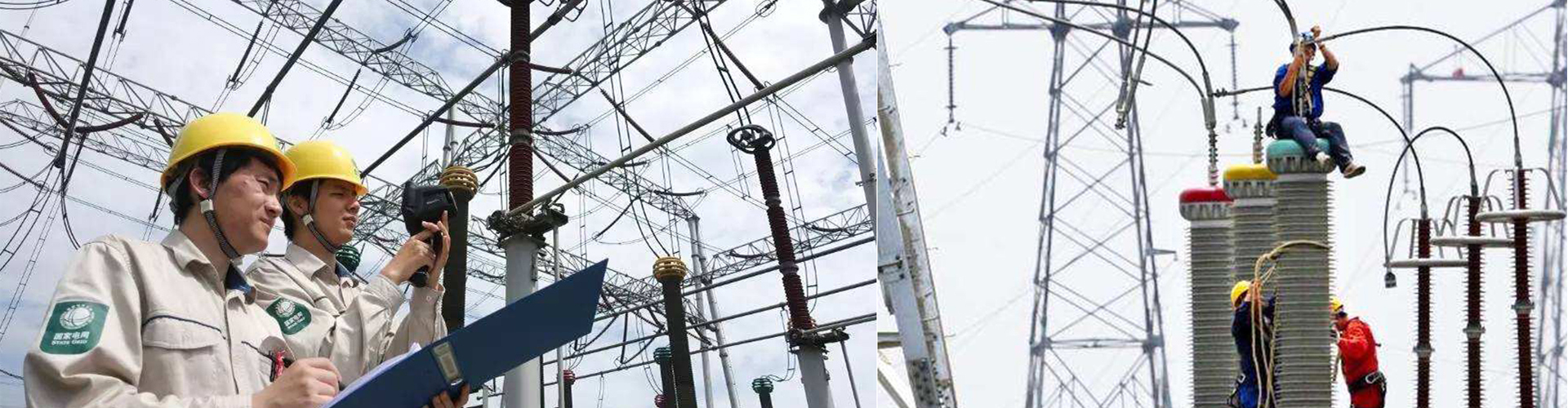
In the cable line maintenance of a certain power company, technicians discovered an unexplained fault in an underground cable section. By using a cable fault tester, they quickly located the fault point and confirmed it was a grounding fault caused by insulation damage at the cable joint. Subsequently, the technicians repaired the cable section and restored normal power supply to the line.
Conclusion
The cable fault tester is one of the indispensable tools in power system maintenance. Through precise fault location and diagnosis, it can greatly improve the reliability and safety of the power system. With technological development, future cable fault testers will become more intelligent and portable, bringing more convenience and support to the maintenance work of the power industry.