
It can be elaborated in detail from the following aspects:
Title
Series Variable Frequency Resonant Test: Enhancing Efficiency and Accuracy of Electrical Testing
Introduction
In power systems, performance testing of electrical equipment is crucial to ensure the safe operation of the system. As an efficient electrical testing method, the series variable frequency resonant test is widely used in insulation withstand voltage tests of high-voltage electrical equipment. This article will detail the basic principles, advantages, and applications of the series variable frequency resonant test in modern power engineering.
Overview of Series Variable Frequency Resonant Test
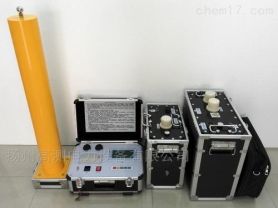
The series variable frequency resonant test is a method that uses a series resonant circuit to generate high-voltage alternating current for withstand voltage testing of electrical equipment. By adjusting the frequency of the test power supply, the circuit reaches a resonant state, thereby producing a higher output voltage at a lower input voltage.
Working Principle
Resonance Condition: In a series resonant circuit, when the inductor (L) and capacitor (C) satisfy the relationship ωL = 1/(ωC), the circuit enters a resonant state, where ω is the angular frequency.
Voltage Amplification Effect: In the resonant state, even with a low input voltage, a very high voltage can be generated across the capacitor, which is very beneficial for testing the insulation strength of high-voltage electrical equipment.
Frequency Adjustment: By adjusting the frequency of the test power supply, the working state of the circuit can be changed, allowing the test to be conducted under the most effective conditions.
Advantages
Safety: Since the resonant circuit can generate high voltage at a lower voltage level, it reduces the risk to operators.
Portability: Compared to traditional withstand voltage test equipment, the series variable frequency resonant test device is smaller in size and lighter in weight, making it easy to carry and use on-site.
Economy: Because only lower input power is needed to generate high voltage, the cost of test equipment is reduced.
Accuracy: By precisely controlling frequency and voltage, accurate assessment of the insulation performance of electrical equipment can be achieved.
Application Examples
Transformer Testing: Conducting withstand voltage tests before transformers leave the factory to ensure their insulation performance meets standards.
Cable Testing: Long-distance transmission cables need withstand voltage tests before and after installation to check for defects in their insulation layer.
GIS (Gas-Insulated Switchgear) Testing: Conducting withstand voltage tests on GIS equipment to verify its working performance under high-voltage conditions.
Test Steps and Precautions
Preparation Phase: Check that all test equipment is in good condition and ensure proper grounding.
Setting Parameters: Set the test frequency and voltage level according to the parameters of the equipment under test.
Conducting the Test: Gradually increase the voltage until it reaches the predetermined value and observe the equipment's reaction.
Recording Data: Record various data during the test, such as voltage, current, frequency, etc.
Safety Measures: Throughout the entire test process, strict adherence to safety regulations is necessary to prevent accidents.
Conclusion
As an advanced electrical testing method, the series variable frequency resonant test has been widely applied in power engineering due to its efficiency, safety, and portability. Through reasonable test design and rigorous operational procedures, the testing efficiency and accuracy of electrical equipment can be effectively improved, ensuring the safe and stable operation of the power system.
This article provides a comprehensive introduction to the basic principles, advantages, and application examples of the series variable frequency resonant test, helping readers understand the importance and practical application value of this electrical testing method.