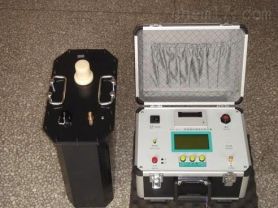

used to evaluate and diagnose the performance of high-voltage switchgear. This type of tester is mainly used for testing circuit breakers, disconnectors, load switches, and other switchgear in power systems to ensure their reliable operation in high-voltage grids. Below is a detailed introduction to the switch characteristic tester:
Main Uses
Mechanical characteristic testing: Measures parameters such as the operating time, travel, and speed of the switch.
Electrical characteristic testing: Tests electrical performance indicators such as contact resistance and withstand voltage level of the switch.
Fault diagnosis: Helps identify problems in switchgear, such as contact wear and mechanical jamming.
Maintenance and repair: Provides a basis for the maintenance of switchgear, extending the service life of the equipment.
Test Items
Opening and closing time: Measures the time required for the switch to complete the opening or closing operation after receiving the command.
Travel: Measures the distance the contacts move, ensuring that the contacts can correctly engage or disengage.
Speed: Measures the average or instantaneous speed of the contacts during the opening and closing process.
Synchronization: Evaluates the consistency of action among phases in a multi-phase switch.
Contact resistance: Measures the contact resistance between contacts to ensure a good electrical connection.
Technical Specifications
Test range: Depending on the type of switch and application requirements, the tester has different test ranges.
Accuracy: The accuracy of test results, usually expressed as a percentage.
Sampling frequency: The number of times data is collected per unit time, affecting the resolution of the test.
Interface: The connection method with the device under test, such as analog interface or digital communication interface.
Usage Scenarios
Substations: Regularly test high-voltage circuit breakers to ensure they operate reliably in emergency situations.
Power plants: Test key equipment such as generator outlet switches and main transformer side switches.
Transmission and distribution lines: Perform maintenance testing on disconnectors and load switches along the lines.
Laboratories: Research institutions and manufacturers conduct test verification during the new product development phase.
Purchasing Guide
Scope of application: Choose a suitable tester based on the type of equipment to be tested and technical requirements.
Accuracy requirements: Determine the required accuracy based on the test purpose; for some applications, higher accuracy test results may be needed.
Ease of use: Consider the simplicity of operation, portability, and user-friendliness of the interface.
After-sales service: Choose a brand with good after-sales support so that technical support can be obtained promptly when problems arise.
Usage Precautions
Safety first: Follow all safety regulations and wear personal protective equipment during operation.
Correct connection: Ensure all connections are correct to avoid equipment damage due to incorrect operation.
Environmental conditions: Pay attention to factors such as temperature and humidity in the test environment to avoid affecting test results.
Regular calibration: To ensure the accuracy of test results, the tester should be calibrated regularly.
Switch characteristic testers play a vital role in the maintenance and safety management of power systems. Through regular testing and maintenance, hidden dangers in switchgear can be discovered and resolved in a timely manner, ensuring the stable operation of the power system.