Title Suggestions
"Ultrasonic Partial Discharge Detector: Principles, Applications, and Development Trends"
"Unveiling the Ultrasonic Partial Discharge Detector: A New Tool for Power Equipment Maintenance"
"Application and Practice of Ultrasonic Partial Discharge Detector in the Power Industry"
Article Outline
Introduction
Briefly introduce the hazards of partial discharge and the importance of ultrasonic partial discharge detectors.
Concept and Hazards of Partial Discharge
Basic concept of partial discharge.
Possible consequences of partial discharge, such as insulation aging, equipment failure, etc.
Working Principle of Ultrasonic Partial Discharge Detector
Physical phenomena generated by partial discharge.
How ultrasonic partial discharge detectors capture these signals.
Introduction to different detection technologies, such as ultrasonic, transient earth voltage, ultra-high frequency, etc.
Functions and Features of Ultrasonic Partial Discharge Detector
Multiple detection modes: ultrasonic, transient earth voltage, ultra-high frequency, etc.
Portability and flexibility.
Data processing and analysis capabilities.
Application Scenarios and Case Analysis
Typical application scenarios such as GIS equipment, switchgear, cable terminals, etc.
Sharing actual detection cases to demonstrate detection effectiveness.
Operation Process and Precautions
Preparation work and instrument settings.
Detection steps and techniques.
Safety operation guidelines.
Development Trends and Future Outlook
Current market status and development trends.
Application prospects of new technologies and new materials.
Impact and contribution to the power industry.
Conclusion
Summarize the importance and future development direction of ultrasonic partial discharge detectors.
Writing Tips
When introducing the working principle, some charts or schematic diagrams can be appropriately added to assist in explanation.
In the case analysis section, try to use recent examples to reflect the latest technology application status.
You can interview some industry experts or users to obtain first-hand experience feedback.
Example Paragraphs
Introduction
In the operation of power systems, partial discharge (PD) is a common phenomenon that may lead to insulation aging or even failure of power equipment. To effectively monitor and prevent such problems, ultrasonic partial discharge detectors have emerged as an advanced detection tool. This article will detail the working principle, main functions, and practical applications of ultrasonic partial discharge detectors in power equipment maintenance, aiming to provide practical reference information for power engineers and maintenance personnel.
Working Principle
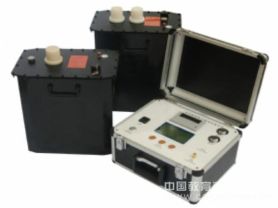
When partial discharge occurs inside power equipment, a series of physical phenomena are generated, including ultrasonic signals, transient earth voltage signals, electromagnetic radiation, etc. Ultrasonic partial discharge detectors utilize this principle by capturing these signals to detect the presence of partial discharge. Typically, the detector is equipped with ultrasonic sensors that convert ultrasonic signals into electrical signals, which are then analyzed by the built-in processor and finally displayed on the screen. In addition, some high-end detectors offer multiple detection modes, such as transient earth voltage (TEV) and ultra-high frequency (UHF), to meet different detection needs.
Please start writing your article based on the above outline and example paragraphs. If you have specific needs or want to delve deeper into certain parts, please let me know.