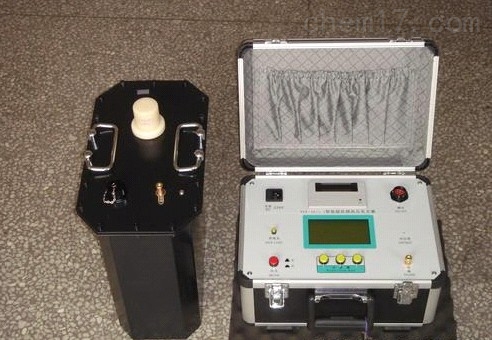

Ultrasonic Partial Discharge Detector
Overview
The ultrasonic partial discharge detector is a partial discharge detection device based on the ultrasonic detection method. By measuring and analyzing the ultrasonic waves generated during partial discharge, it achieves the detection and location of discharge points in power lines. It can perform laser positioning, image acquisition, and waveform recording of abnormal points, providing strong support for the maintenance of power equipment.
Working Principle
When partial discharge occurs inside power equipment, a series of physical effects are generated, including ultrasonic waves. These ultrasonic signals can propagate through air or other media. The ultrasonic partial discharge detector captures these ultrasonic signals and analyzes them to determine the location and intensity of the partial discharge.
Main Functions
Ultrasonic Detection: Captures ultrasonic signals generated by partial discharge.
Laser Positioning: Uses a laser to indicate the specific location of partial discharge.
Image Acquisition: Records image information from the detection site to assist in fault analysis.
Waveform Recording: Saves the ultrasonic waveforms generated by partial discharge for further analysis.
Data Analysis: Provides data analysis software to help users understand detection results.
Technical Specifications
Frequency Response: Typically covers the frequency range from 20kHz to 100kHz.
Sensitivity: May vary depending on the model.
Detection Distance: Depending on the instrument's performance, it can effectively detect within a range of a few meters to over ten meters.
Display Method: LCD screen displays detection results and waveforms.
Power Supply: Powered by built-in battery, supporting long-duration continuous operation.
Usage Method
Preparation: Ensure the instrument is charged or has sufficient battery power.
Parameter Setting: Select the appropriate detection mode and parameters based on the object being tested.
Start Detection: Place the sensor close to the detection target and listen for ultrasonic signals.
Data Recording: Record relevant information such as the location of abnormal points and waveforms.
Data Analysis: Use the accompanying software for data analysis to determine the type and severity of partial discharge.
Application Fields
Power Systems: Detects partial discharge in power equipment such as transformers, switchgear, and cable terminations.
Railway Transportation: Monitors partial discharge phenomena in track electrical systems.
Manufacturing: Detects partial discharge in mechanical equipment such as motors and generators.
Precautions
Safe Operation: Follow all safety operating procedures to avoid the risk of electric shock.
Environmental Factors: Consider the impact of ambient temperature, humidity, etc., on test results.
Interference Sources: Minimize the influence of external interference sources as much as possible.
Regular Calibration: Ensure the accuracy and reliability of the instrument.
Conclusion
The ultrasonic partial discharge detector is one of the important tools for health diagnosis of power equipment. By conducting regular partial discharge detection, potential insulation problems can be identified early, necessary maintenance measures can be taken, extending equipment life and reducing the risk of failure.
I hope this article provides you with basic information about the ultrasonic partial discharge detector. If you have any further questions or need more specific details, please feel free to let me know.