
Partial Discharge (PD) is a common electrical fault phenomenon in power equipment, especially for critical equipment like transformers. The presence of partial discharge can lead to severe consequences such as equipment damage and power outages. Therefore, it is crucial to use transformer partial discharge detection devices for regular inspection of power systems. This article will introduce the basic principles, detection methods, and applications of transformer partial discharge detection devices in power systems.
Overview of Transformer Partial Discharge Detection Devices
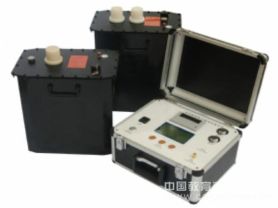
Transformer partial discharge detection devices are professional equipment used to detect and evaluate partial discharge activities inside transformers. Such devices typically include one or more sensors, as well as hardware and software systems for data analysis and result display. By detecting various physical signals generated by partial discharge (such as electromagnetic waves, acoustic waves, etc.), potential insulation defects can be identified in a timely manner, preventing the occurrence of faults.
Working Principles
Transformer partial discharge detection devices mainly operate based on the following principles:
Ultrasonic Monitoring Principle: During partial discharge, intense collisions occur between molecules in the discharge area, generating ultrasonic signals. The detection device determines whether partial discharge is present by capturing these ultrasonic signals with frequencies higher than 20kHz.
Transient Earth Voltage (TEV) Detection Principle: Partial discharge generates changing electric fields, which in turn excite changes in magnetic fields. By detecting these changing electric field signals, the degree of partial discharge can be assessed.
Ultra-High Frequency (UHF) Detection Principle: Partial discharge also generates ultra-high frequency electromagnetic waves that can propagate inside the transformer. UHF sensors can capture these signals and analyze them to determine the location and severity of partial discharge.
Device Characteristics
Typical transformer partial discharge detection devices have the following characteristics:
The capacitance range of testable objects: usually covers from 6 picofarads (pF) to 250 microfarads (μF).
Detection sensitivity and allowable current: different sensitivities and current limits depending on the device model.
Elliptical scanning time base: supports multiple frequency options such as 50Hz, 100Hz, 150Hz, 200Hz, 400Hz, etc., allowing selection of appropriate frequency based on testing needs.
Display unit: uses a rectangular oscilloscope tube to display partial discharge graphical information, equipped with brightness and focus adjustment knobs.
Multiple measurement functions: in addition to ultrasonic detection, various measurement modes such as TEV, UHF, AE (Acoustic Emission) can be achieved by configuring different sensors.
Application Scenarios
Transformer partial discharge detection devices are widely used in preventive maintenance of various high-voltage equipment, for example:
High-voltage switchgear: detect insulation defects inside switchgear.
Ring main units: assess partial discharge conditions in ring main units.
Transformers: monitor insulation aging inside transformers.
GIS (Gas Insulated Switchgear): inspect insulation issues in GIS equipment.
Overhead lines: assess partial discharge conditions in overhead lines.
Cable terminations and cable branch boxes: detect insulation conditions in cable systems.
Usage Methods
Sensor configuration: select appropriate sensors based on the detection target.
Device connection: connect the detection device to the transformer, ensuring a firm and reliable connection.
Parameter settings: adjust detection parameters such as frequency and sensitivity according to actual conditions.
Data acquisition: start the detection process to collect signals generated by partial discharge.
Data analysis: use the device's built-in software to analyze the collected data and assess insulation status.
Report generation: generate detailed detection reports based on analysis results, providing a basis for subsequent maintenance decisions.
Conclusion
Transformer partial discharge detection devices are important tools for ensuring the safe and stable operation of power systems. By conducting regular inspections of transformers, potential insulation defects can be identified in a timely manner, and corresponding maintenance measures can be taken to avoid major accidents, thereby ensuring the long-term reliable operation of the power system.
The above is an overview of an article about transformer partial discharge detection devices. Specific product features and parameters may vary depending on the manufacturer and model. If you need detailed information about a specific model, please provide the specific model name or other relevant information.