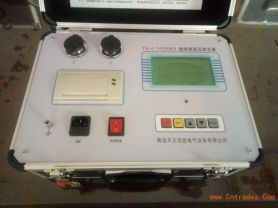


Ultrasonic partial discharge inspection and positioning instrument is a professional device used to detect and locate partial discharge phenomena in power systems. This type of instrument is typically used for preventive maintenance and fault troubleshooting, helping technicians quickly identify potential insulation defects, thereby preventing potential power equipment failures. Below is an overview of an article about the ultrasonic partial discharge inspection and positioning instrument.
Ultrasonic Partial Discharge Inspection and Positioning Instrument: Technical Principles and Applications
Introduction
With the continuous development of the power system, higher requirements have been placed on the safety and reliability of power equipment. As an advanced detection tool, the ultrasonic partial discharge inspection and positioning instrument can detect and locate partial discharge positions without power outage, which is crucial for ensuring the stable operation of the power system.
Technical Principles
Ultrasonic Detection: Partial discharge generates high-frequency sound waves, i.e., ultrasound, with frequencies typically above 20 kHz, beyond the audible range of the human ear.
Signal Processing: Built-in ultrasonic sensors capture these signals and convert them into audible sounds or visual signals for technician analysis.
Positioning Function: Utilizes techniques such as multi-point reception or phase difference to determine the exact location of partial discharge.
Main Functions
Rapid Detection: Quickly identifies partial discharge phenomena in energized equipment.
Precise Positioning: Through signal analysis and processing, accurately locates the exact position where partial discharge occurs.
Multiple Applications:
Scan high-voltage cable terminations and insulators to check for partial discharge.
Scan open equipment in substations to detect corona discharge phenomena.
Scan dry-type transformer coils to check for discharge conditions.
Scan transformer bushings to check for corona discharge.
Conduct overall scanning of the transformer body to detect abnormal vibrations.
Advantages
Non-contact Measurement: Detection can be performed without direct contact with equipment, reducing personnel safety risks.
Immunity to Electromagnetic Interference: Ultrasonic detection technology is unaffected by electromagnetic fields, suitable for complex electromagnetic environments.
Ease of Operation: Most devices are compact, portable, and simple to operate.
Use Cases
High-voltage Cable Detection: Using the ultrasonic inspection and positioning instrument at cable terminations or joints can quickly identify potential partial discharge issues.
Substation Equipment Inspection: Regularly scan open equipment in substations to ensure normal operation.
Transformer Maintenance: Conduct comprehensive inspections of transformers, including bushings, coils, and other components, to ensure no partial discharge conditions exist.
Conclusion
As an effective detection tool, the ultrasonic partial discharge inspection and positioning instrument greatly improves the efficiency and accuracy of power equipment maintenance. By regularly using such instruments for detection, potential issues can be identified and resolved promptly, ensuring the stable operation of the power system.