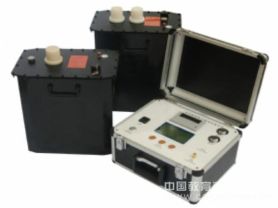


Partial discharge (PD) detection is an important part of preventive maintenance for power equipment. As a professional detection tool, the single-channel partial discharge tester is widely used in power systems to evaluate the insulation status of high-voltage equipment, promptly identify potential insulation defects, and thus avoid equipment failures. This article will introduce the working principle, technical characteristics, and applications of the single-channel partial discharge tester in the power industry.
Working Principle
The single-channel partial discharge tester primarily works by detecting the pulse current signals generated by partial discharges inside power equipment. When partial discharge occurs inside power equipment, transient high-frequency pulse currents are generated in the equipment's electrical circuit. These pulse current signals can be coupled into the detection circuit through coupling capacitors (such as the distributed capacitance of the test object itself or externally added coupling capacitors). Subsequently, these pulse signals are captured by the input unit, amplified by a low-noise preamplifier, filtered through a filter amplifier to select the desired frequency band, and finally further amplified by the main amplifier to achieve the required amplitude, while generating a zero-marker pulse. The discharge pulses are displayed as visible pulses on the oscilloscope screen and simultaneously sent to a pulse peak meter to display their peak values.
To improve detection accuracy, the single-channel partial discharge tester also requires appropriate calibration. A common method is the comparison method, where a certain amount of charge is injected into both ends of the sample before the test, the amplification factor is adjusted to establish a scale, and then the partial discharge pulses received from the sample under actual voltage are compared with the scale to obtain the apparent discharge charge of the sample.
Technical Characteristics
Technical characteristics of the single-channel partial discharge tester include
High sensitivity: Capable of capturing very weak partial discharge pulses, ensuring detection accuracy.
Easy operation: User-friendly interface, simple operation, suitable for field use.
Precise calibration: Provides standard calibration methods to ensure the reliability of test results.
Single-channel design: Focuses on a single signal channel, simplifying the testing process and reducing costs.
Visual display: Intuitive display of detection results on the screen, helping operators quickly understand data.
Usage Steps
Startup preparation: Adjust the time base mode to "ellipse" to prepare for testing.
Calibration: Correctly connect the calibration pulse generator and enable calibration.
Connect test circuit: Disconnect the calibration connection line, remove the calibration pulse generator, and connect the high-voltage test circuit power supply.
Voltage increase test: Slowly increase the test voltage, observe the discharge pulse signals, and determine the partial discharge inception voltage.
Adjust amplifier: When discharge pulse signals are observed, adjust the amplifier switch to keep the discharge pulse height between 0.2 and 2 cm, and calculate the discharge amount.
Record data: Record test data and generate a detection report as needed.
Application Scenarios
The single-channel partial discharge tester is widely used in various equipment in power systems, including but not limited to:
Transformers: Used to detect partial discharges inside transformers and evaluate insulation status.
High-voltage cables: Used to detect partial discharges at cable terminations and intermediate joints.
High-voltage switchgear: Used to detect partial discharge phenomena inside switchgear cabinets.
Gas-insulated switchgear (GIS): Monitors partial discharge activity inside GIS.
Conclusion
As an important tool for health monitoring of power equipment, the single-channel partial discharge tester plays a significant role in the maintenance and fault prediction of power systems. By regularly using the single-channel partial discharge tester for detection, it is possible to effectively prevent power equipment failures and ensure the stable operation of the power system.