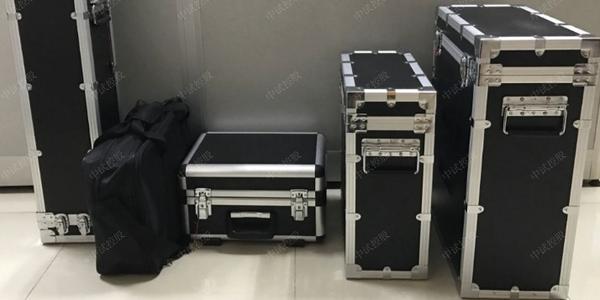


A handheld partial discharge detector is a professional device used to detect partial discharge phenomena inside power equipment. Partial discharge detection is of great significance for assessing the insulation condition of power equipment and preventing faults. This article will provide a detailed introduction to the working principle, characteristics, application scope, usage methods, and maintenance suggestions of the handheld partial discharge detector.
Working Principle
The working principle of the handheld partial discharge detector is based on the physical phenomena generated during partial discharge, especially ultrasonic signals. When partial discharge occurs inside power equipment, a series of physical phenomena are generated, including:
Electrical pulses: Current pulses generated by partial discharge.
Ultrasound: Ultrasonic signals generated by partial discharge.
Electromagnetic radiation: Electromagnetic wave signals generated by partial discharge.
Light: Light signals generated by partial discharge.
Chemical reactions: Chemical changes triggered by partial discharge.
The handheld partial discharge detector captures these ultrasonic signals through built-in sensors, and processes and analyzes them through internal circuits and software to determine whether partial discharge exists and further locate the source of the discharge.
Main Features
The features of the handheld partial discharge detector include
High sensitivity: Capable of detecting weak ultrasonic signals.
Easy operation: Equipped with an intuitive user interface for convenient on-site operation.
Data recording and analysis: Can record detection data and analyze it through software.
Multiple display modes: Supports various display modes such as ellipse, straight line, and sine wave, facilitating observation of discharge pulses.
Auxiliary functions: Some advanced models also feature auxiliary zero-mark systems, linear/logarithmic dual-function pointer meters, and digital meters.
Strong anti-interference: Utilizes digital filtering technology to effectively eliminate on-site interference.
Remote positioning: Can remotely locate the position of the partial discharge source.
Technical Parameters
Ultrasonic sensor type: Built-in ultrasonic sensor.
Frequency range: Typically 20kHz to 100kHz.
Sensitivity: Typically capable of detecting tiny ultrasonic signals.
Battery life: Generally several hours.
Display unit: Uses a color LCD screen, supporting multiple display modes.
Data storage: Built-in memory, capable of storing large amounts of detection data.
Application Scope
The handheld partial discharge detector is widely used in the maintenance and inspection of power systems, including but not limited to:
Power transformers: Used to monitor partial discharge conditions inside transformers.
High-voltage switchgear: Monitors partial discharge phenomena within switchgear.
Cable terminations: Detects partial discharge in cable terminations.
Instrument transformers: Detects partial discharge in voltage transformers and current transformers.
Power cables: Assesses the insulation condition of cables.
Railway power systems: Especially suitable for inspection and positioning of various insulation and connection faults in overhead contact systems of railway power systems.
Usage Methods
Startup preparation: Set the time base mode to "ellipse".
Calibration: Correctly connect the calibration pulse generator and enable calibration.
After calibration: Disconnect the calibration connection line and remove the calibration pulse generator.
Connect power: Connect the power supply of the high-voltage test circuit, turn on the zero-mark switch, and slowly increase the test voltage.
Observe discharge: Observe the zero-mark pulse appearing on the ellipse on the display, and rotate the "ellipse rotation" to a position convenient for observing the discharge.
Continuously increase voltage: Pay attention to continuous discharge. When the discharge amount exceeds the specified low value, the voltage at that time is the partial discharge inception voltage.
Maintenance Suggestions
Regular inspection: Regularly check whether the equipment functions properly and whether the battery level is sufficient.
Cleaning and maintenance: Gently wipe the instrument surface with a soft cloth, avoiding solvents or corrosive substances.
Storage conditions: Store in a dry, ventilated place, avoiding high temperature or humid environments.
Fuse check: When the terminal is energized but the handheld partial discharge detector cannot start normally, check whether the fuse on the power socket is intact. If it is blown, replace it with a new fuse.
Prevent exposure: When used outdoors, try to stay in a shaded area to avoid prolonged exposure to direct sunlight.
Conclusion
The handheld partial discharge detector is one of the indispensable tools in power system maintenance and plays an important role in preventing and reducing power equipment faults. By comprehensively considering the above factors, users can proficiently master the usage methods of the handheld partial discharge detector and perform appropriate maintenance to ensure its long-term stable operation.
Please adjust the content of this article according to your specific needs, and if you need more detailed information or specific data, feel free to let me know.