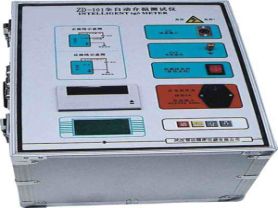
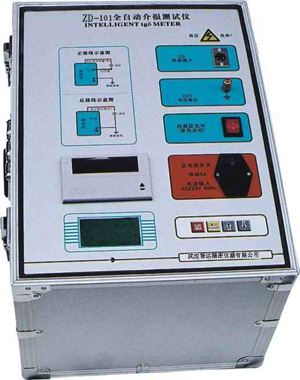
Intelligent Dielectric Loss Tester
Darui Electric recommends to you:
The intelligent dielectric loss tester has strong anti-interference capability, and can maintain stable and reliable results even at substation sites with voltage levels of 500KV (or even higher). It supports not only single-frequency testing but also dual-frequency testing at 45/55Hz.The intelligent dielectric loss tester has strong anti-interference capability, and can maintain stable and reliable results even at substation sites with voltage levels of 500KV (or even higher). It supports not only single-frequency testing but also dual-frequency testing at 45/55Hz.
Intelligent Dielectric Loss Tester Technical Specifications:
● Anti-interference method: Frequency conversion anti-interference
● Test methods: Positive connection, reverse connection, self-excitation method, external connection method
● Measurement range: Capacitance with internal high voltage < 60000PF
External high voltage 30P ~ 600000PF
Minimum resolution 0.001%
● Accuracy: Capacitance 1.5%±1.5PF
Dielectric loss 1%±0.07%
● Additional functions: Insulation resistance test
Electronic perpetual calendar
Standard RS232 interface
● Internal test power supply: 0.5~10KV voltage with gradual rise and fall
45~65HZ frequency adjustable 45/55Hz
47.5/52.5HZ automatic dual-frequency test
Maximum output current: 200mA
Self-excitation power supply: 3~50V frequency conversion
Maximum output current: 20A
● Working environment temperature: -10~50℃
● Humidity: 30%~70%
● Dimensions: 430×320×300mm 25Kg
Product usage precautions:
1. This instrument can only be used on de-energized equipment; other equipment may remain energized.
2. The instrument comes with a built-in voltage boosting device. Pay attention to the insulation of the high-voltage lead and personnel safety.
3. The instrument should be reliably grounded.
4. Before using this instrument to test equipment, perform an insulation test on the equipment first.
5. Determine the voltage withstand level of the equipment and correctly select the instrument's voltage boosting gear to prevent breakdown of the equipment and damage to the instrument.
6. Although the dedicated high-voltage cable supplied with the instrument has passed inspection at the factory, it should still be kept away from the human body during measurement.
7. The input voltage is AC220V±10%. Exceeding this range may affect the test accuracy. The maximum input voltage is AC264V. Exceeding this value will cause permanent damage, and the manufacturer will not provide warranty for such damage.
8. The printer may experience paper jams during transportation due to loose paper roll. In such case, simply remove the paper roll, tighten it, and reinstall it.
9. The instrument should be protected from moisture and severe vibration.
10. When powered by a generator, the output neutral line should be grounded; otherwise, a grounding error will be indicated.
 Note: The above information and technical parameters are compiled and released by Yangzhou Darui Electric Co., Ltd.