The CTPT (Current Transformer and Voltage Transformer) testing of online cable switchgear is an important maintenance activity that ensures the accuracy and reliability of these critical devices, thereby safeguarding the stable operation of the entire power system. The following is an outline of an article on online cable switchgear CTPT testing:
Online Cable Switchgear CTPT Testing
1. Introduction
Background: Cable switchgear is a vital component in the power system, and CTPT, as its core part, directly impacts the operational safety of the power system through its accuracy.
Importance of Testing: Regular CTPT testing not only ensures that performance meets standards but also helps detect potential issues early, preventing failures.
Research Purpose: This article aims to introduce the methods, procedures, and significance of online cable switchgear CTPT testing.
2. CTPT Overview
Current Transformer (CT): Explain the working principle of current transformers and their role in the power system.
Voltage Transformer (PT): Explain the working principle of voltage transformers and their role in the power system.
Importance: Elaborate on the significant position of CT and PT in the power system.
3. Purpose and Significance of CTPT Testing
Accuracy Verification: Ensure that the ratio error and phase angle error of CT and PT are within allowable limits.
Fault Detection: Early detection of potential faults in CT and PT, such as insulation aging and core saturation.
Maintenance Planning: Provide a basis for switchgear maintenance and extend equipment service life.
4. Online Testing Methods
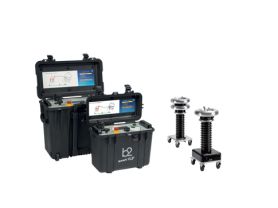
Variable Frequency Method: Use a CTPT characteristic comprehensive tester (e.g., CPT-220P variable frequency transformer comprehensive characteristic tester) to perform the test, which can be completed without interrupting the power supply.
Test Steps:
Preparation: Check that the test equipment is in good condition and confirm the status of the device under test.
Connection: Correctly connect the CTPT to the test equipment according to the tester's manual.
Parameter Setting: Set appropriate test parameters based on the technical specifications of the CTPT under test.
Execution: Start the test equipment, observe and record the test results.
Data Processing: Analyze the test data to evaluate the performance of the CTPT.
Result Reporting: Prepare a test report including test conditions, results, and recommendations.
5. Safety Measures
Personal Protection: Wear appropriate personal protective equipment, such as insulating gloves and insulating shoes.
Environmental Monitoring: Ensure the test environment meets safety standards to prevent accidental electric shock.
Operating Procedures: Follow operating procedures to ensure personnel safety during testing.
6. Practical Case
Case Description: Introduce a specific online cable switchgear CTPT testing case, including test background, process, and results.
Result Analysis: Analyze based on test results, pointing out existing issues and possible causes.
Improvement Suggestions: Propose improvement measures or maintenance recommendations to enhance CTPT performance.
7. Conclusions and Recommendations
Summary: Review the importance and implementation process of online cable switchgear CTPT testing.
Outlook: Discuss future development directions of CTPT testing technology, such as the application of intelligent testing equipment.
8. References
Related Literature: List the relevant academic papers and technical reports cited in this article, providing resources for further reading.
Please adjust or supplement the above outline according to your specific needs. If you require more detailed content or have other specific requirements, please let me know.