
Transformer Partial Discharge Tester and Its Application
Abstract
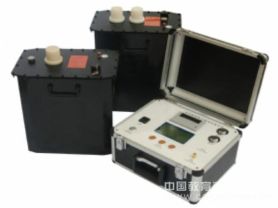
This article introduces a testing instrument used to detect partial discharge phenomena inside transformers, and discusses its application in transformer maintenance and diagnosis. The partial discharge tester can help power engineers promptly identify potential defects inside transformers, thereby taking measures to avoid major accidents.
Introduction
Transformers are one of the key equipment in the power system, and their reliability and stability directly affect the operation quality of the entire power system. Partial discharge is one of the main causes of transformer insulation aging. Therefore, regular partial discharge testing is crucial to ensure the safe operation of transformers.
Principle of Partial Discharge Tester
The partial discharge tester identifies the presence of partial discharge by detecting electromagnetic waves or acoustic signals generated inside the transformer. Common testing methods include:
Electromagnetic wave detection: Using sensors to capture high-frequency electromagnetic waves generated by partial discharge.
Ultrasonic detection: Detecting ultrasonic signals generated by partial discharge through ultrasonic sensors.
Testing Steps
Preparation: Ensure the instrument is properly grounded, connected to power, and set to the appropriate display mode.
Calibration: Before applying high voltage, calibrate using a calibration pulse generator and adjust the amplifier gain to obtain appropriate pulse height.
Formal testing: Gradually increase the test voltage until discharge pulses are observed, and record the discharge inception voltage and extinction voltage.
Data Analysis
Graphical display: Use a color LCD screen to display graphics for easy observation and analysis.
Discharge measurement: Read the energy of discharge pulses through a digital meter to ensure it does not exceed the specified threshold.
Waveform locking: Lock specific waveforms for subsequent analysis.
Application Cases
Case 1: A partial discharge test was conducted on a 110kV transformer, and continuous discharge was found at a specific voltage, indicating possible insulation defects.
Case 2: Using a partial discharge tester to conduct quality inspection on newly produced transformers before leaving the factory, ensuring products meet safety standards.
Conclusion
The partial discharge tester is an indispensable tool in transformer maintenance. It helps technicians quickly locate and solve potential insulation problems, thereby improving the overall safety of the power system.
The above content serves only as an overview. In actual testing, relevant safety regulations and standards must be followed. If you need more detailed information or specific testing guidance, please refer to relevant technical manuals or consult professional electrical engineers.