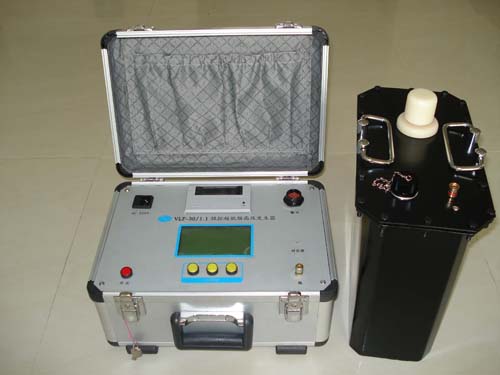

The transformer capacity characteristic tester is a high-precision instrument used for accurately measuring and evaluating the capacity, loss parameters, and other key characteristics of power transformers. The design and development of this instrument aim to meet the demand for transformer performance evaluation in power system maintenance, especially for precise measurement of transformer capacity and loss parameters.
Working Principle
The working principle of the transformer capacity characteristic tester is based on analyzing the behavior of the transformer under different load conditions. It can determine the transformer's capacity and characteristics by measuring the no-load current, no-load loss, short-circuit voltage, short-circuit loss, and zero-sequence impedance. These measurements are based on the following two main loss mechanisms:
Hysteresis loss: When alternating current passes through the transformer, the direction and magnitude of the magnetic flux lines in the silicon steel sheets change, causing internal molecular friction that generates heat, which is hysteresis loss.
Eddy current loss: The magnetic flux lines in the iron core induce a current in the perpendicular plane, forming a self-contained eddy current. The heat generated by this eddy current is eddy current loss.
Functions and Applications
The transformer capacity characteristic tester has multiple functions, including:
Capacity measurement: Passive measurement, which can directly measure the transformer's capacity without an external power supply.
Loss measurement: Measures the no-load loss and short-circuit loss of the transformer to evaluate its efficiency and economy.
Waveform distortion correction: Automatically corrects waveform distortion to ensure the accuracy of measurement results.
Temperature correction: Provides temperature correction functionality, considering the impact of temperature on measurement results.
Voltage and current correction: Adapts to measurements under non-rated conditions, performing voltage and current correction to improve measurement accuracy.
Operation and Features
Simple operation: The tester is designed to be simple; operators only need to input the correction index based on the transformer type, and the instrument automatically calculates the corrected results.
Multi-functional measurement: In addition to capacity and loss measurement, it can also perform waveform analysis, temperature correction, etc.
High precision: Provides high-precision measurement results, which helps in asset management for power companies.
Wireless communication: Some modern testers are equipped with wireless communication functions, facilitating data transmission and remote monitoring.
Industry Impact
The introduction of the transformer capacity characteristic tester has greatly improved the efficiency of transformer maintenance and management in power systems. It not only helps power companies accurately assess the health status of transformers but also can be used to prevent illegal capacity expansion and electricity fee evasion, ensuring the safe and stable operation of the power system.
Conclusion
As a key technical tool in power system maintenance, the transformer capacity characteristic tester brings significant improvements to transformer management in the power industry through its high-precision measurement capability and versatility. With continuous technological advancement, the performance of such testers will be further enhanced, making them indispensable detection equipment in power systems.