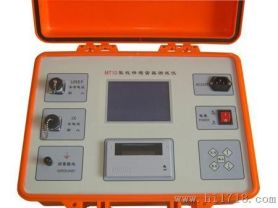
An important tool used in the system to evaluate the performance and health status of transformers. Below is a comprehensive article summary about the transformer capacity characteristic tester:
Transformer Capacity Characteristic Tester: A Tool for Evaluating Transformer Performance
Introduction
Transformers are core components in power networks, and their health directly affects the stability and efficiency of the grid. The transformer capacity characteristic tester is a high-precision instrument used to measure transformer capacity, losses, and other key parameters, helping power engineers accurately assess the condition of transformers and ensure their efficient operation.
Principle and Basis
The working principle of the tester is based on electromagnetic mutual inductance, utilizing the hysteresis loss and eddy current loss inside the transformer for measurement. Hysteresis loss is due to energy loss during the magnetization and demagnetization process of the iron core material, while eddy current loss is caused by induced currents in the iron core. The tester precisely measures these losses and, combined with other parameters, calculates the actual capacity and efficiency of the transformer.
Functions and Features
Capacity Measurement: Precisely measures the rated capacity of the transformer to verify whether it meets the nominal value.
Loss Measurement: Includes no-load loss and load loss, used to evaluate transformer efficiency.
Waveform Distortion Correction: Automatically corrects measurement errors due to waveform distortion.
Temperature Correction: Considers the impact of temperature on transformer performance and performs temperature compensation.
Voltage and Current Correction: Corrects under non-standard conditions to ensure measurement accuracy.
Versatility: Can test various types and specifications of transformers.
Ease of Operation
Modern transformer capacity characteristic testers are user-friendly in design, with intuitive interfaces and built-in data processing software that can automatically complete complex calculations, greatly simplifying the testing process and improving work efficiency.
Application Scenarios
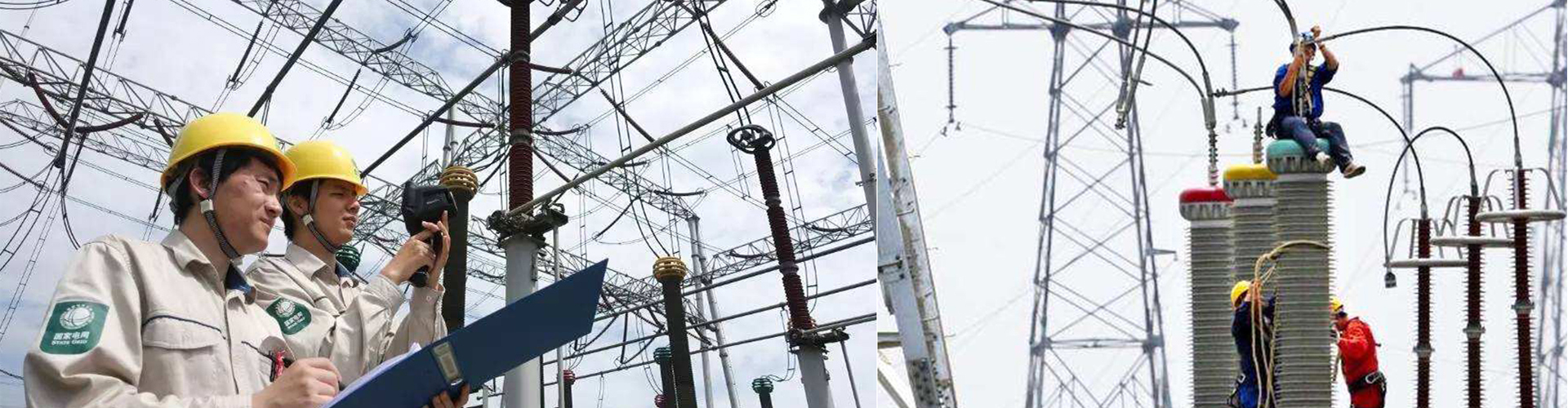
Power System Maintenance: Regularly test transformers to ensure they operate in optimal condition.
Transformer Selection: Used to evaluate the performance of different models when purchasing or replacing transformers.
Fault Diagnosis: When transformers malfunction, it is used to quickly locate the problem.
Conclusion
Transformer capacity characteristic tester is a sharp tool in the hands of power engineers. It not only provides a comprehensive assessment of transformer performance but also plays an important role in fault diagnosis and preventive maintenance. With continuous technological advancement, future testers will become more portable and intelligent, providing stronger support for the safe and stable operation of power systems.
The transformer capacity characteristic tester is an indispensable tool in the field of power engineering. Through precise measurement and data analysis, it provides important decision-making basis for the power system, ensuring the reliability of power supply. For power companies and related industries, mastering and reasonably applying these testing technologies is key to ensuring grid safety and efficiency.