
Of course. Below is a draft article about the transformer partial discharge tester, covering its working principles, operation steps, and applications.
Transformer Partial Discharge Tester: Principles, Operation and Applications
Abstract
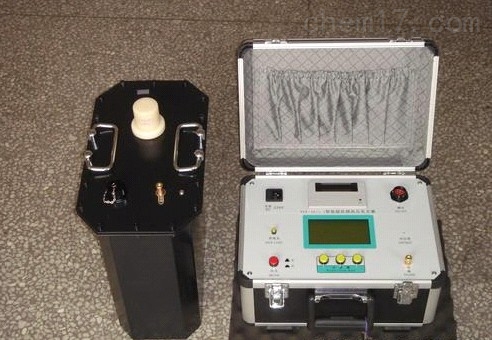
The transformer partial discharge tester is a professional device used to detect partial discharge phenomena inside transformers. By capturing electromagnetic signals generated by partial discharges within the transformer, this instrument can effectively diagnose and locate potential insulation defects, which is of great significance for preventing transformer faults and accidents. This article will detail the working principles, operation steps, and applications of the transformer partial discharge tester in the power industry.
Introduction
Partial discharge refers to the phenomenon of charge release occurring in localized areas within the insulation medium of power equipment. Prolonged existence may lead to the deterioration of insulation materials and even eventual breakdown faults. The transformer partial discharge tester can detect and locate these potential problem points by capturing signals generated by partial discharges, which is crucial for the safe operation of power systems.
Working Principles
The working principles of the transformer partial discharge tester mainly include the following steps:
Signal Capture: When partial discharge occurs inside the transformer, electromagnetic signals are generated.
Signal Amplification: The instrument's built-in high-sensitivity sensors capture these signals and amplify them through a preamplifier.
Signal Processing: The amplified signals are filtered and analyzed by a signal processor to eliminate interference signals.
Display and Location: The processed signals are displayed on the screen, and the approximate location of the partial discharge is calculated through algorithms.
Operation Steps
Preparation Phase:
Check that all components of the tester are intact and confirm the power connection is correct.
Prepare the transformer to be tested and ensure it is in an appropriate state.
Clean and prepare the test points.
Instrument Connection:
Connect the sensor to the test point of the transformer under test.
Ensure all connections are secure and reliable.
Parameter Setting:
Set test parameters according to test standards, such as sensitivity and filtering range.
Set the control unit to automatically record partial discharge signals.
Executing the Test:
Start the tester and automatically begin capturing partial discharge signals.
Move the sensor across the transformer surface to scan for potential partial discharge sources.
Slowly increase the test voltage until the first discharge pulse appears.
Data Analysis:
Analyze the signals during the test to determine whether partial discharge phenomena exist in the transformer.
If abnormal signal activity is detected, further investigation of the cause is required.
Record the number and intensity of discharge pulses, and determine the partial discharge inception voltage and extinction voltage.
Safe Shutdown:
After the test is completed, turn off the power switch.
Disconnect all connections and clean up the site.
Precautions
Ensure all operations are conducted under the guidance of professionals.
Closely monitor signal changes during the test.
After the test, ensure complete power-off before proceeding with any further operations.
Use appropriate personal protective equipment.
Application Cases
Case Study: Provide examples to illustrate the effectiveness of the transformer partial discharge tester in practical applications, such as discovering partial discharge phenomena inside a transformer and then taking measures for repair or replacement.
Development Trends and Challenges
Technological Progress: With the advancement of electronic technology, the precision and stability of new transformer partial discharge testers continue to improve.
Data Analysis: Utilize big data and artificial intelligence technologies for more in-depth data analysis to enhance detection efficiency and accuracy.
Integration and Portability: Instruments are developing towards greater integration and portability, facilitating on-site use.
Conclusion
The transformer partial discharge tester, as one of the important testing tools in the power industry, is of great significance for ensuring the safety and reliability of power equipment. With continuous technological advancement, its application in the power industry will become increasingly widespread.
This framework provides a basic structure, and you can add more details and technical information according to specific needs. If you require more detailed content or specific experimental data, please let me know your specific requirements.