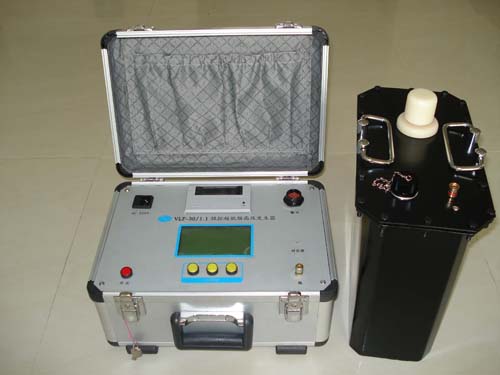

Transformer partial discharge tester is a professional device used to detect whether there is partial discharge phenomenon inside the transformer. Partial discharge detection can help evaluate the insulation condition of the transformer, timely discover potential faults, and ensure the safe operation of the power system. Below is an outline for an article about the transformer partial discharge tester, based on which you can write the article:
Title
Transformer Partial Discharge Tester: A Key Tool for Ensuring Power System Safety
Introduction
Background: Briefly introduce the concept of partial discharge and its impact on power equipment.
Importance of transformer partial discharge testing: Emphasize the importance of transformer partial discharge tester in preventive maintenance of power equipment.
Basics of Partial Discharge Detection
Mechanism of partial discharge: Explain how partial discharge occurs, including various forms of partial discharge that may appear in transformers.
Detection methods for partial discharge: Introduce several common partial discharge detection methods, such as pulse current method, ultrasonic detection, optical detection, etc.
Significance of partial discharge detection: Emphasize the importance of partial discharge detection for assessing the health status of transformers.
Working Principle of Transformer Partial Discharge Tester
Detection principle: Explain how the tester detects partial discharge by detecting high-frequency pulse current.
Technical features: Introduce the main components of the tester, such as sensors, preamplifiers, filter amplifiers, main amplifiers, etc.
Signal processing: Describe the signal processing flow, including signal amplification, filtering, peak detection, etc.
Technical Specifications and Performance Indicators
Frequency response range: Describe the range of signal frequencies that the tester can effectively detect.
Sensitivity: The ability of the tester to detect the smallest partial discharge signals.
Dynamic range: The ability of the tester to distinguish between partial discharge signals of different intensities.
Anti-interference capability: The ability to maintain accurate measurements in complex electromagnetic environments.
Data output methods: Introduce how data is recorded, displayed, or transmitted to a computer for further analysis.
Application Cases
Transformer testing: Provide examples of how it is applied to detect partial discharge in transformers.
Cable testing: Describe specific application methods in cable testing.
Switchgear testing: Introduce application scenarios in switchgear testing.
Usage Methods and Precautions
Installation guidance: Provide specific steps for installing sensors.
Operation guide: List the basic operation procedures during use.
Safety precautions: Emphasize safety matters to be noted during use, such as ensuring the equipment is tested under safe voltage levels, avoiding electric shock hazards, etc.
Maintenance: Provide suggestions for daily maintenance and care.
Technical Advantages and Limitations
Advantages: Discuss the benefits brought by the transformer partial discharge tester, such as improved detection efficiency, simultaneous multi-point detection, etc.
Limitations: Point out possible limiting factors, such as cost, operational complexity, etc.
Future Development Trends
Technological innovation: Look forward to possible technological advancements, such as AI-assisted analysis, wireless remote monitoring, etc.
Industry standards: Mention the development direction of relevant industry standards and regulations.
Conclusion
Summary: Review the importance and application prospects of the transformer partial discharge tester.
Call to action: Encourage the power industry to adopt advanced detection technologies to enhance the safety and reliability of the power grid.
References
Academic research: List relevant academic papers and research reports.
Industry reports: Provide links to authoritative reports from the power industry.
Technical manuals: Cite technical manuals provided by manufacturers.
With the above structure, you can write a comprehensive article introducing the transformer partial discharge tester. Remember to incorporate the latest research findings and technological developments when writing to ensure the content is accurate and timely. If you need more specific information or technical details, feel free to ask me at any time.