
Abstract
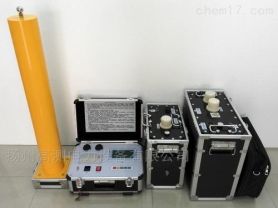
The series variable frequency resonant test is an important testing technique for evaluating the insulation status of high-voltage electrical equipment in power systems. This test method excites resonance by adjusting the power supply frequency, thereby generating high voltage at a relatively low test voltage, and is applicable to various high-voltage equipment such as cables, transformers, GIS (Gas Insulated Switchgear), motors, and generators. This article aims to explore the basic principles, key advantages, operational procedures, and application cases of the series variable frequency resonant test in power equipment testing.
I. Basic Principles
The series variable frequency resonant test is based on the principle of a series resonant circuit, where the test power supply, resonant reactor, adjustable capacitor, and the test object form a series circuit. When the power supply frequency is adjusted to the natural resonant frequency of the test object, the inductive reactance and capacitive reactance in the circuit cancel each other out, forming a purely resistive load. At this point, even if the input voltage is relatively low, high voltage can be generated across the test object under resonant conditions, allowing the test to be conducted at a safe voltage while achieving the purpose of a high-voltage test.
II. Key Advantages
Improved Safety: Since the test voltage can be increased gradually and no high voltage is generated at non-resonant frequencies, the risk during the test process is reduced.
Wide Applicability: The same set of equipment can be used for testing different types of electrical equipment, improving equipment utilization and economic efficiency.
Energy Saving: The series resonant test only requires energy to maintain resonance, significantly reducing energy consumption compared to traditional high-voltage test methods.
Enhanced Accuracy: By precisely controlling frequency and voltage, more accurate test results can be obtained, helping to detect potential insulation defects.
III. Operational Procedures
Preparation Phase: Connect the test equipment and the test object, and set test parameters including start and end frequencies, initial voltage, step test voltage, and time.
Tuning Process: Starting from the set initial frequency, gradually adjust the frequency until the resonant point is found, at which the voltage reaches its peak.
Withstand Voltage Test: After finding the resonant point, increase the voltage to the predetermined test voltage and maintain it for a certain period to verify the insulation performance of the test object.
Data Analysis: Record test data, analyze results, and determine whether the test object meets insulation standards.
IV. Application Cases
The series variable frequency resonant test is widely used in the power industry. Here are several typical application scenarios:
Cable Testing: For long-distance cables, traditional high-voltage tests may not be feasible due to capacitive effects, but the series variable frequency resonant test can effectively overcome this limitation.
GIS Equipment Testing: In the AC withstand voltage test of 750kV GIS equipment, the series variable frequency resonant technology has been successfully applied to ensure the insulation performance of the equipment.
Transformer Testing: In preventive tests of transformers, the series variable frequency resonant test is used to check insulation status and promptly detect potential fault hazards.
V. Conclusion
As an advanced power equipment testing technology, the series variable frequency resonant test plays an indispensable role in the maintenance and testing of power equipment due to its unique advantages. With continuous technological advancement, it is expected that the series variable frequency resonant test will be more widely applied in the power industry, providing solid support for the safe operation of power systems.