DARUI Electric recommends:
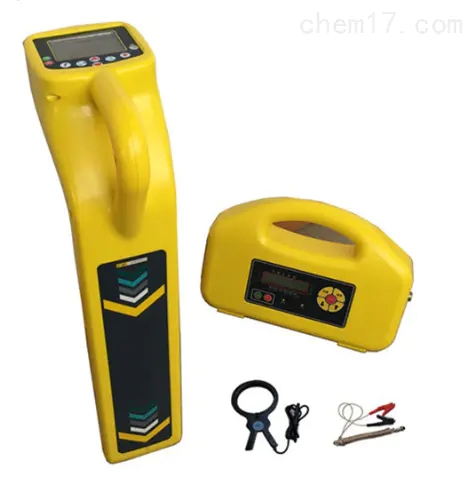
I. Features of TN-6018 Multifunctional Cable Fault Locator
(1) Multiple Functions
1. Transmitter functions: It has three signal application modes: induction method, direct connection method, and clamp method, suitable for different occasions.
2. Receiver functions: Used for measuring the position, direction, burial depth, and current in the pipe of underground pipelines and cables.
3. Left and right positioning arrows indicate the target pipeline position, enabling fast and accurate positioning; front and back arrows and dB values indicate the position and size of anti-corrosion coating damage points.
4. Backlight function, suitable for nighttime emergency use.
5. GPS geolocation function, automatically mapping pipeline routes.
6. Professional data analysis software, automatically generating inspection reports.
7. TN-6018E receiver special function: Used for fault location (pipeline faults refer to damage to the external anti-corrosion coating, cable faults refer to damage to the outer sheath), detecting insulation damage of underground pipelines.
8. Current measurement: Measures the current applied to the tested pipeline by the transmitter.
9. Multimeter function: Can measure output voltage, line voltage, line current, impedance, and power. Test the continuity and insulation quality of cables before and after fault finding.
10. External inductive clamp: Suitable for places where the signal cannot be directly applied when testing cables.
(2) High Positioning Accuracy:
Multiple measurement modes for pipeline positioning (null mode, peak mode, wide peak mode, peak arrow mode) can be mutually verified to ensure positioning accuracy.
1. Maximum value method: Use peak mode, wide peak mode, or peak arrow mode to measure the horizontal component ( ) or horizontal gradient (
 ) changes, and locate based on the position of its maximum value;
2. Minimum value method: Use null mode, by measuring the vertical component ( ) changes, and locate based on the position of its minimum value.
(3) Multiple Depth Measurement Methods:
Multiple depth measurement methods are available and can be mutually verified.
1. Dual horizontal coil direct reading method;
2. Single horizontal coil 80% method, 50% method;
3. 45-degree method.
(4) Strong Anti-interference Capability
1. Multiple observation parameters: Can measure horizontal component ( ), vertical component (
 ), and horizontal gradient (
 ).
).
2. High transmission power: The transmitter output power reaches 10W and is continuously adjustable, selectable as needed.
3. Multiple operating frequencies:
Transmitter frequencies: 128Hz, 512Hz, 1KHz, 2KHz, 8KHz, 33KHz, 65KHz, 83KHz.
Receiver frequencies: Radio, 50Hz, 100Hz, 128Hz, 512Hz, 1KHz, 2KHz, 8KHz, 33KHz, 65KHz, 83KHz.
Select the appropriate operating frequency based on the characteristics of the target pipeline (material, structure, burial depth, length, etc.) and the environment.
(5) Easy Operation
1. Intuitive: Uses a graphical display, continuously and real-time displaying various parameters and signal strength during the inspection process.
2. Automatic: When measuring depth, it automatically switches to dual horizontal antenna mode and automatically adjusts receiver sensitivity to achieve the best measurement signal. After depth measurement, it automatically restores to the working mode before depth measurement.
(6) Long Continuous Working Time, Low Usage Cost
The transmitter is equipped with a large-capacity lithium battery pack. One charge can meet the power supply needs for a full day of field detection, and it can be reused, greatly reducing detection costs.
(7) Transmitter Supports Both AC and DC Power
Under normal circumstances, if the transmitter battery is sufficiently charged, use the built-in battery pack for power supply. If the transmitter battery runs low during use but the detection task is not completed, you can directly connect an external dedicated power adapter, and the instrument can be used normally without waiting for a full charge.
Note: The above information and technical parameters are compiled and released by Yangzhou DARUI Electric Co., Ltd.