DC resistance testing is a fundamental and crucial detection item in the maintenance, acceptance, and fault diagnosis of electrical equipment, especially for high-power inductive devices such as transformers, motors, and instrument transformers. This test not only evaluates the condition of the conductive circuit but also identifies potential issues like poor contact, welding defects, inter-turn short circuits, and wiring errors, thereby ensuring the safe and stable operation of the power system. This article will delve into the importance of DC resistance testing, testing principles, common methods, and the application of modern testing equipment.
Importance of Testing
DC resistance testing is an indispensable part of electrical equipment installation, overhaul, and preventive maintenance. Through measurement, it can determine whether the equipment has overheating risks, check the integrity of electrical connections, and verify whether the equipment meets design specifications, which is of great significance for ensuring efficient and safe operation of power equipment.
Testing Principles and Methods
DC resistance testing mainly employs the following methods:
Current-Voltage Method: Inject an appropriate DC current into the winding under test, measure the voltage drop across the winding, and calculate the DC resistance based on Ohm's law. This method is straightforward and convenient, but attention must be paid to the simultaneous measurement of current and voltage.
Balanced Bridge Method: Utilize the principle of single-arm or double-arm bridges, adjust the bridge arm resistances to achieve a balanced state, and directly read the resistance value. This method offers high accuracy and is especially suitable for low-resistance measurements.
Simultaneous Three-Phase Winding Voltage Application Method: Apply voltage to the three-phase windings simultaneously, using Lenz's law to cancel out the magnetic fluxes of each phase current, reducing the inductive effect and speeding up the testing process. This is suitable for large transformers.
Modern Testing Equipment
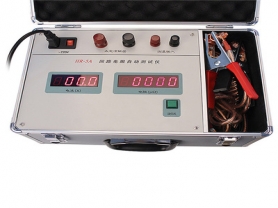
With technological advancements, intelligent instruments such as the TE2120 DC resistance tester have emerged, replacing traditional bridge methods and voltage-drop methods. These devices not only significantly shorten measurement time and reduce the burden on testers but also effectively compensate for the current inertia of large inductive equipment, rapidly reaching a stable test current value. They feature automatic temperature compensation, which can automatically convert the resistance value to that at standard temperature based on ambient temperature, further improving measurement accuracy and convenience.
Conclusion
DC resistance testing is not only a basic requirement for power equipment maintenance but also a strong guarantee for the safe operation of power systems. The use of modern testing techniques and equipment not only enables efficient completion of testing tasks but also allows for early detection and prevention of potential faults, reducing power outages caused by equipment failures, which is crucial for the reliable operation of the power system. With continuous technological innovation, future DC resistance testing will become more intelligent and automated, providing more safeguards for the safe production of the power industry.