

Before engaging in construction project investment activities, the project feasibility study report is a document prepared by the feasibility study entity (usually a professional consulting agency) to conduct specific investigation, research, and analysis on political, legal, economic, social, technical, and other project influencing factors, identify favorable and unfavorable factors, analyze project necessity, evaluate project economic and social benefits, and provide decision-making support opinions for project investors or apply for approval from project主管部门. The "Feasibility Study Report for Microcomputer Relay Protection Calibration Instrument Project" conducts investigation, research, analysis, and comparison from technical, economic, and engineering perspectives through research on market demand, resource supply, construction scale, process route, equipment selection, environmental impact, fund raising, profitability, etc., and scientifically predicts the possible financial, economic benefits, and social environmental impacts after project completion, providing fair, reliable, and scientific investment consulting opinions for project decision-making. Specifically, this report has the following main uses: The project feasibility research expert team of Beijing Huajing Horizontal and Vertical Technology Co., Ltd. has rich practical project operation experience and a large number of successful cases, and can provide professional consulting services for project declaration and approval, ensuring the quality of the feasibility report.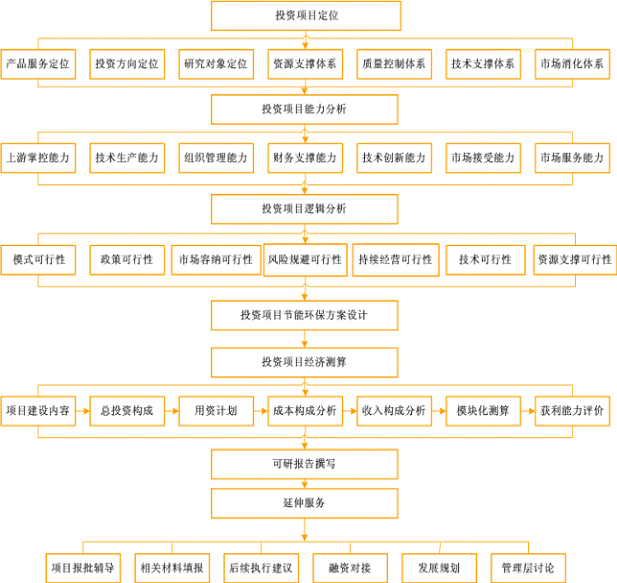 As the first part of the feasibility study report, the general introduction comprehensively describes the main problems and research conclusions of each part of the report, and puts forward final suggestions on whether the project is feasible, providing convenience for the approval of the feasibility study. 6. "Economic Evaluation Methods and Parameters for Construction Projects (Third Edition)", National Development and Reform Commission 2006 In the feasibility study, clear conclusions should be drawn on major issues such as product sales, raw material supply, policy guarantee, technical scheme, total capital and financing, financial benefits, national economy, and social benefits of the project, mainly including: In the general introduction, the main technical and economic indicators of each part of the report can be summarized, and a table of main technical and economic indicators can be listed to enable approval and decision-makers to have a full understanding of the project. The total project investment mainly comes from the self-raised funds of the project sponsor company, and the project declaration and approval work is planned to be completed before March 2012. It is expected that the total project investment funds will be in place by the end of April 2011. During the entire project construction period, the main tasks include compiling the project feasibility study report, project filing, civil engineering and supporting projects, personnel recruitment and training, equipment signing, equipment production, equipment operation and acceptance, etc. The project sponsor company plans to set up a special fund account for the management of project construction funds. For insufficient funds, bank loans, equipment financing, cooperation, leasing, and other methods will be used to solve. The raw materials for project products are currently in sufficient supply on the market and can be purchased nearby. The project adheres to the concept of producing high-quality products and creating a first-class brand, strictly controls the raw material link, selects raw material suppliers, and ensures smooth production. The project production adheres to the principles of high starting point and high standards, plans to purchase advanced technology and process equipment, introduce advanced production management experience, provide professional training for production technical staff, and ensure high production efficiency, advanced process, and product quality up to standard. This part mainly explains the background of the project initiation, the necessity of investment, the reasons for investment, and the supporting conditions for project development. The industry to which the microcomputer relay protection calibration instrument project belongs has developed rapidly in recent years. The industry plays an increasingly obvious role in prospering the domestic market, expanding export earnings, absorbing social employment, and promoting economic growth…… China attaches great importance to the development of the microcomputer relay protection calibration instrument field, and the policy intensity of the state and local governments in this field has been significantly strengthened in recent years, mainly reflected in the following aspects: This project construction adheres to a high starting point and high standard scheme. To ensure process advancement, key equipment is introduced from foreign manufacturers, and other auxiliary equipment is selected from domestic manufacturers. The company was established in 1998 and restructured into a joint-stock company in 2001. After years of technical transformation and production practice, the company has created first-class microcomputer relay protection calibration instrument technology and advanced management technology, and can fully produce and test according to industry standards. The introduction of its new technical scheme will effectively ensure the smooth implementation of this project. The implementation of the microcomputer relay protection calibration instrument project is organized by the project sponsor company itself, introducing advanced production equipment, and the civil engineering project is organized and constructed by the company itself. After the project is completed, the project operation will be led by a wholly-owned subsidiary of the company, and the project products will face both domestic and international markets. At present, the domestic and foreign markets are developing rapidly, the market space is expanding faster, and market demand is strong, which can ensure effective product sales. The important position of market analysis in the feasibility study lies in that any project, its production scale determination, technology selection, investment estimation, and even site selection must be decided after fully understanding the market demand. Moreover, the results of market analysis can also determine product prices, sales revenue, and ultimately affect the profitability and feasibility of the project. In the feasibility study report, it is necessary to study the current market status in detail as the basis for later decision-making. Market forecasting is the continuation of market research in time and space. It uses the information and data obtained from market research, based on the conclusions of market information data analysis reports, to conduct quantitative and qualitative judgment and analysis of the future market demand for this project's products and related factors. In feasibility study work, the conclusions of market forecasting are the necessary basis for formulating product plans and determining the construction scale of the project. In a commodity economy environment, enterprises should formulate a qualified sales model according to market conditions, strive to expand market share, stabilize sales prices, and improve product competitiveness. Therefore, in the feasibility study, it is necessary to study the marketing model. In recent years, the diversified industrial economy of the project location has developed rapidly, the primary industry has been basically stable, and the industrial economy has developed strongly; emerging industries have become the new driving force for local economic development; the tertiary industry such as catering, entertainment, transportation, etc. has flourished; a large number of restructured enterprises are full of vitality, and the development of the private economy has accelerated. The key production adjustment projects have been solidly promoted, the diversified pillar industrial structure is being formed, and the comprehensive strength has been significantly enhanced…… The project operates locally, faces both domestic and international markets, and the project construction site has superior transportation conditions. At present, a three-dimensional transportation network of railway, highway, and aviation has been formed. Highways extend in all directions, with 3 national highways and 2 provincial highways in the territory. The pace of expressway construction has further accelerated, which will further improve the local highway transportation conditions. The gradually optimized transportation conditions are conducive to improving the efficiency of the logistics link of product sales, enabling products to be timely delivered to the sales target market. In project construction, it is necessary to implement national laws and regulations on environmental protection, energy conservation, and occupational safety and health. The possible short-term and long-term impacts of the project on the environment, and factors affecting workers' health and safety, must be analyzed in the feasibility study stage, and prevention measures should be proposed and evaluated, recommending the best scheme that is technically feasible, economical, reasonably laid out, and has less harmful impact on the environment. According to the current national regulations, all construction projects that have an impact on the environment must implement the approval system for environmental impact reports. At the same time, in the feasibility study report, environmental protection and labor safety must be specifically discussed. According to the regulations of the National Development and Reform Commission, energy conservation needs to be listed as a separate chapter. According to the relevant regulations of the National Development and Reform Commission, for public building projects with a construction area of more than 20,000 square meters, residential building projects with a construction area of more than 200,000 square meters, and other projects with an annual energy consumption of more than 2,000 tons of standard coal, the project construction party must issue a "Special Chapter on Energy Conservation" as an important part of the project energy conservation assessment and review. The project must obtain the energy conservation review and approval opinion before it can be approved. Therefore, for projects with a construction scale exceeding the requirements of the National Development and Reform Commission, the "Special Chapter on Energy Conservation" is a necessary link in the pre-review of project construction, just like the "Environmental Impact Assessment Report". In the feasibility study report, according to the project scale, project composition, and process flow, the corresponding enterprise organization structure, total labor force, labor source, and corresponding personnel training plan are studied and proposed. This project adopts "standardized training" to implement personnel training. The so-called "standardized training" refers to pre-post recruitment, basic skill training, etc., which are uniformly implemented by the company's technical backbone of each department according to regulations, striving to make employees familiar with the company's business and various basic skills they need to master. After standardized training, the company determines positions based on each person's performance, and then the technical leader of each position provides apprenticeship-style guidance and training for the specific business of the position. The combination of the two methods not only ensures the accuracy of employee positioning but also shortens the time for employees to become qualified employees after positioning, which has an excellent effect on saving personnel training costs and shortening training time. The schedule arrangement during the project implementation period is also an important part of the feasibility study report. The so-called project implementation period can also be called the investment time, which refers to the period from the formal determination of the construction project to the project reaching normal production. This period includes various work stages such as project implementation preparation, fund raising arrangement, survey and design and equipment ordering, construction preparation, construction and production preparation, trial operation until completion acceptance and delivery for use. Some of the investment activities and work links in these stages are mutually influential, News Center closely connected before and after, and some are carried out simultaneously and cross each other. Therefore, in the feasibility study stage, it is necessary to uniformly plan, comprehensively balance, and make reasonable and feasible arrangements for each work link in each stage of the project implementation period.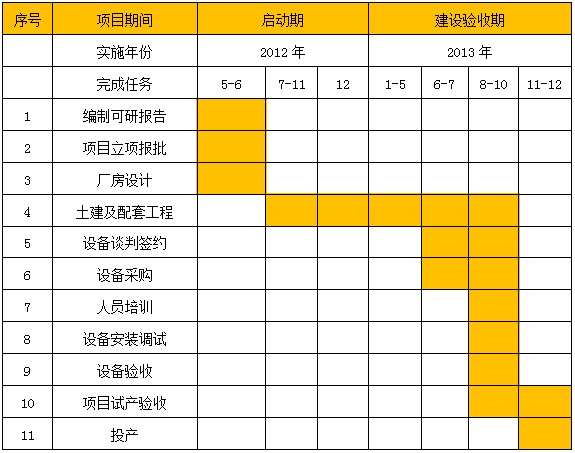
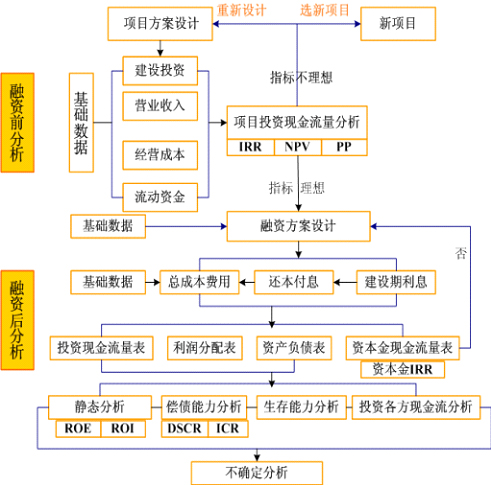 The investment funds required for a construction project can be obtained from multiple sources. In the project feasibility study stage, the fund raising work is based on the results of the fixed asset investment estimation and working capital estimation of the construction project, studying and implementing the source channels and raising methods of funds, and selecting funds with favorable conditions. In the feasibility study report, each source channel of funds and its raising method should be discussed one by one. Necessary calculation tables and attachments should also be attached. In the feasibility study, the following contents should be explained: 1. "Accounting Law of the People's Republic of China", [Order No. 24 of the President], implemented from January 1, 2000. 3. "Regulations on the Implementation of the Enterprise Income Tax Law of the People's Republic of China", [Order No. 512 of the State Council], implemented from January 1, 2008. 4. "Detailed Rules for the Implementation of the Interim Regulations of the People's Republic of China on Value-Added Tax", [Order No. 50 of the Ministry of Finance and the State Administration of Taxation], implemented from January 1, 2009. 5. "Economic Evaluation Methods and Parameters for Construction Projects (Third Edition)", approved and implemented by the National Development and Reform Commission in 2006. When evaluating a construction project, most of the data used come from forecasts and estimates. Due to the limited nature of information and data, the actual situation in the future may differ, which may bring risks to project investment decisions. To avoid or minimize risks as much as possible, it is necessary to analyze the impact of uncertain factors on the economic evaluation indicators of the project to determine the reliability of the project. This is uncertainty analysis. According to different analysis contents and focuses, uncertainty analysis can be divided into break-even analysis, sensitivity analysis, and probability analysis. In feasibility studies, break-even analysis, sensitivity analysis, and probability analysis are generally carried out, depending on the project situation. After the technical route of the construction project is determined, it is necessary to conduct financial and economic benefit evaluations of different schemes to judge whether the project is economically feasible and select the excellent scheme. The evaluation conclusion in this part is one of the main bases for recommending the selection of the scheme and an important basis for investment decisions on the construction project. This part provides a brief explanation of the main contents of the financial, economic, and social benefit evaluations in the feasibility study report. Financial evaluation examines the financial status of the project after completion, including profitability, debt repayment ability, and foreign exchange balance ability, to judge the financial feasibility of the construction project. Financial evaluation mostly uses a combination of static analysis and dynamic analysis, with dynamic analysis as the main method. The financial evaluation indicators are compared with the corresponding benchmark parameters - financial benchmark yield, industry average investment payback period, average investment profit rate, and investment profit tax rate - to judge whether the project is financially feasible. Financial net present value refers to the sum of the present values of the annual financial net cash flows during the project calculation period, discounted to the beginning of the construction period (the beginning of the first year of the project calculation period) at a set standard discount rate (benchmark yield). Financial net present value is the main dynamic evaluation indicator for examining the profitability of the project during its calculation period. If the project financial net present value is equal to or greater than zero, it indicates that the project's profitability has reached or exceeded the required profit level, and the project is financially feasible.
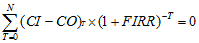
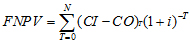 Financial internal rate of return refers to the discount rate at which the sum of the present values of the annual financial net cash flows during the entire calculation period of the project is equal to zero, that is, the discount rate at which the financial net present value of the project is equal to zero.
 Investment payback period can be divided into static investment payback period and dynamic investment payback period according to whether the time value of funds is considered. Taking the dynamic payback period as an example: the calculation of the dynamic investment payback period in practical applications is based on the project's cash flow statement, using the following approximate formula: Pt = (year in which the cumulative net cash flow present value becomes positive - 1) + absolute value of the cumulative net cash flow present value of the previous year / net cash flow present value of the year in which it becomes positive 1) When Pt ≤ Pc (benchmark investment payback period), it indicates that the project (or scheme) can recover the investment within the required time and is feasible; Project investment return rate refers to the ratio of the annual earnings before interest and tax (EBIT) in a normal year after the project reaches design capacity or the average annual EBIT during the operation period to the total project investment (TI). When the total investment return rate is higher than the reference value of the same industry,
 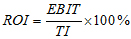 ROI ≥ department (industry) average investment profit rate (or benchmark investment profit rate), the project can be considered acceptable financially. Project investment profit tax rate refers to the ratio of the annual total profit or average annual total profit in a normal production year after the project reaches design production capacity, plus sales tax and surcharges, to the total project investment. The calculation formula is: when the investment profit tax rate ≥ department (industry) average investment profit tax rate (or benchmark investment profit tax rate), the project can be considered acceptable financially. Project capital net profit rate refers to the ratio of the annual net profit in a normal year after the project reaches design capacity or the average net profit during the operation period (NP) to the project capital (EC).
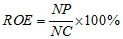 When the project capital net profit rate is higher than the reference value of the same industry, it indicates that the profitability expressed by the project capital net profit rate meets the requirements. National economic evaluation is the core part of project economic evaluation and an important basis for decision-making departments to consider project selection. The national economic evaluation of construction projects adopts the method of cost-benefit analysis, using parameters such as shadow prices, shadow exchange rates, shadow wages, and social discount rates to calculate the net contribution of the project to the national economy and evaluate the economic rationality of the project. National economic evaluation adopts national economic profitability analysis and foreign exchange effect analysis, with the economic internal rate of return (EIRR) as the main evaluation indicator. According to the specific characteristics and actual needs of the project, the economic net present value (ENPV) indicator can also be calculated. For projects involving product export to earn foreign exchange or import substitution to save foreign exchange, the economic foreign exchange net present value (ENPV), economic foreign exchange earning cost, or economic foreign exchange saving cost should be calculated. In the feasibility study, in addition to calculating and analyzing the above indicators, the social benefits and social impacts of the project should also be analyzed, that is, qualitative descriptions of non-quantifiable benefit impacts. Based on the research and analysis results of the previous sections, a comprehensive evaluation of the project in terms of technology and economy is conducted, the construction plan is summarized, and conclusive opinions and suggestions are put forward. The main contents are: 1. Conclusive opinions on the construction conditions, product plan, process technology, economic benefits, social benefits, and environmental impacts of the recommended proposed scheme. Any documents that fall within the scope of the project feasibility study but are separately bound outside the study report should be listed as appendices to the feasibility study report, and the appendices should indicate the name, date, and number.Angli relay protection testerAC high voltage generatorSix-phase relay protection tester

- Home
- About Us
- Products
- DC Resistance Tester
- High Current Generator
- Loop Resistance Tester
- Transformer Test Transformer
- Feature Comprehensive Tester
- Capacitance/Inductance Tester
- Transformer Capacity Characteristic Tester
- DC HV Generator
- Dielectric Loss Tester
- Triple Frequency Generator
- Switch Characteristic Tester
- Series Variable Frequency Resonance Test
- Insulation Resistance Tester
- Turns Ratio and Vector Group Tester
- Lightning Arrester Tester
- Cable Fault Tester
- Lightning Counter Calibrator
- Partial Discharge Tester
- Mining Stray Current Tester
- VLF Insulation Withstand Test
- Company News
- Industry Trends
- Messages
- Contact Us
☎
Service Hotline18952707000