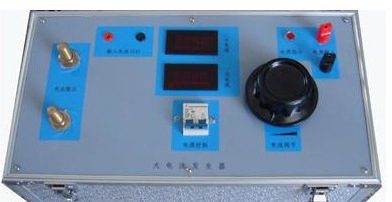
HNGK-506 High Voltage Switch Dynamic Characteristic Tester Performance
1. Time: Intrinsic opening and closing times for 12 break contacts, same-phase synchronization, and inter-phase synchronization.
2. Reclosing: For each break contact, the close-open, open-close, and open-close-open process times: first open time, first close time, second close time, contact touch time, and no-current time values.
3. Bounce: For each break contact, the closing bounce time, bounce count, bounce process, bounce waveform; and the opening rebound amplitude for each break contact.
4. Speed: Just-open and just-close speeds, maximum speed, and time-travel characteristic curve.
5. Travel: Total travel, contact gap, overtravel, overshoot travel, and rebound amplitude.
6. Current: Opening and closing coil current values and current waveform diagrams for opening and closing operations.
HNGK-506 High Voltage Switch Dynamic Characteristic Tester Features
Suitable for mechanical characteristic testing of various types of SF6 switches, GIS combined appliances, vacuum switches, and oil switches.
Linear sensors and rotary sensors are extremely convenient and simple to install.
One switch operation obtains all data and corresponding waveform diagrams for the switch's mechanical characteristic test.
Strong anti-interference capability; even with the bypass bus of a 500kV substation energized, tests can be conducted easily and measurements taken accurately.
The host can store on-site test data, and the built-in real-time clock facilitates archiving and saving of test dates and times.
The host features a large screen, wide temperature range, direct-view, backlit LCD, and full Chinese display of all data and diagrams, with electronic contrast adjustment and power-off memory.
Chinese menu operation for user convenience. The instrument has a built-in printer for quick printing of all data and diagrams at any time. The instrument is equipped with a USB interface and data analysis management software, allowing connection to a PC for computer-based operation. Test results can be directly saved to a USB drive or output to various dot matrix, laser, or inkjet printers for test reports, making on-site testing computerized.