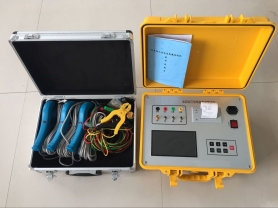
The test transformer control box has the characteristics of convenient use and maintenance, superior performance, safe and reliable use, beautiful appearance, sturdy and durable, and easy to move.
- Chinese Name
- Test Transformer Control Box
- English Name
- Test transformer control box
- Measurement Range
- 0 to 9999 characters
- Power
- 5-100KW
- Measurement Accuracy
- 0.5 %FS ±2
- Power Supply Voltage
- AC220V ±15%, 50 Hz±2 Hz
- Weight
- 10kg
Table of Contents
- 1 Overview
- 2 Functions and Classification
- 3 Features
- 4 Usage Methods
- 5 Parameters
- 6 Operation and Usage Methods
- ▪ Operating Procedures
- ▪ Operating Conditions
Overview
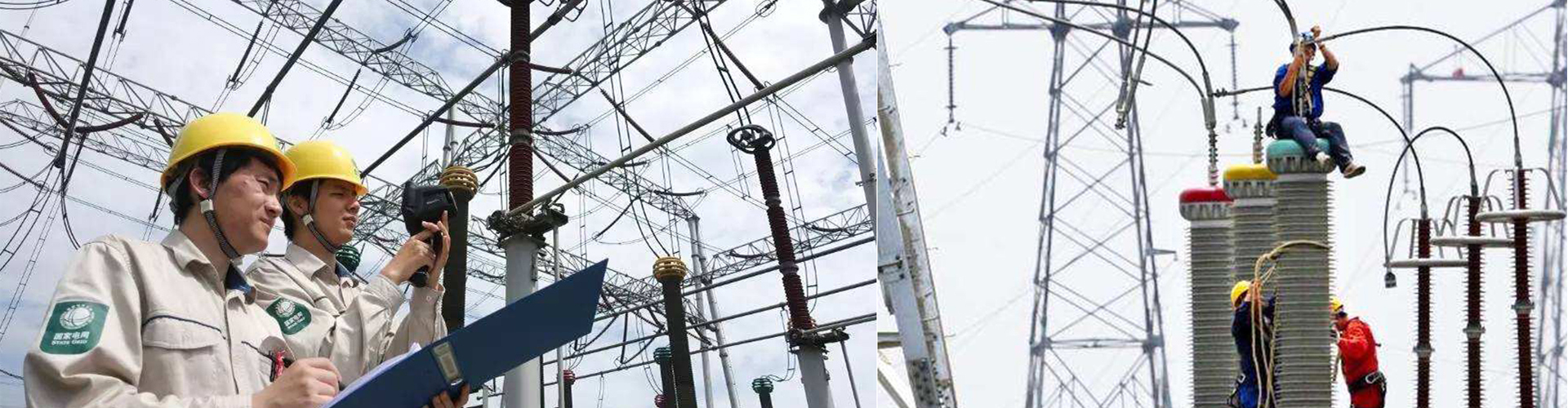
The test transformer control box has the characteristics of convenient use and maintenance, superior performance, safe and reliable use, beautiful appearance, sturdy and durable, and easy to move. It is essential equipment for power supply enterprises, large factories, metallurgy, power plants, railways, and other departments requiring electrical maintenance. It adopts advanced microelectronic processing technology, all processes can be set in advance, with a full Chinese interface, making operation simple and clear. After all test items are set, the test is automatically conducted without manual intervention.
Functions and Classification
The test transformer power control console is used for voltage regulation control of 0.5 to 100KVA test transformers. Its working principle is: by adjusting the output voltage of the autotransformer, the working voltage adjustment within the rated voltage range of the test transformer is achieved. At the same time, the console is equipped with a high-voltage output voltmeter, low-voltage input ammeter, and overcurrent protection circuit. It can conveniently read the test voltage value and reliably protect the equipment. Its principle is simple, structure is compact, and operation is reliable, making it an ideal device for withstand voltage tests. The test transformer power control console is divided into box type, desktop type, and electric type according to structure.
Features
Date, voltage, current, and time four sets of data are displayed on a blue 4.7-inch large screen LCD with backlight, providing clear and intuitive readings, simultaneously displaying voltage, current, time, etc., with various data setting functions;
Full Chinese interface, working status display, simple and clear operation, wide applicability;
With status display and reminder functions, users can see the equipment status at a glance;
Touch-type panel button operation, all functions can be set through buttons, improving product safety and reliability;
Fully digital calibration, abandoning the outdated potentiometer adjustment method, making on-site use extremely convenient;
Buttons directly set current and voltage transformation ratios, allowing flexible application under different ratio inputs;
With overcurrent and overvoltage protection. Protection is accurate and rapid, effectively ensuring the safety of personnel and equipment;
A single button can easily switch between AC and DC display modes for voltage, with automatic voltage boosting function and AC/DC conversion display function; boosting speed can be
adjusted to meet different boosting speed requirements;
Combining hardware and software anti-interference technologies, with stable performance and strong anti-interference capability;
Comes with four outputs, reliable overcurrent and overvoltage protection, precise voltage control capability, and small voltage control error; can be used in different occasions such as overcurrent and overvoltage protection;
The start/stop conditions of the time relay can be arbitrarily set. The settable time range is 1 second to 9999 seconds;
Optional remote communication, door interlock alarm light and bell, external voltage divider calibration interface, etc.;
On startup, the company name, website, and contact phone number are displayed, which is beneficial for brand promotion and publicity;
The product is small in size, light in weight, reasonable in structure, reliable and durable.
Usage Methods
Operating Box (Console) Usage Method: (1) Check whether the main power supply matches the input power (below 10KVA is 220V, above 10KVA is 380V), adjust the current relay (-KA), current multiplier switch, voltage relay (-KV), and voltage multiplier switch action values and multipliers as needed, and set the time relay action value. (2) Apply power, the green light (-HL2) lights up, and when the voltage regulator handwheel is at zero position
, the yellow light (-HL1) lights up, and power can be applied for operation. (3) Press the power-on button (-1SB), the main contactor (-KM) engages, the voltage regulator (-TD) receives power, the green light (-HL1) goes out, the red light (-HL3) lights up, the speaker emits an alarm sound, and the alarm light (-HL5) flashes. After a delay of 10-15 seconds, the sound and light stop automatically, and the test can be conducted. (4) Rotate the voltage regulator handwheel clockwise, watch the voltmeter (-PV) indication, increase the voltage at a rate of less than 3KV per second, and when reaching the required value, press the timing button (-1SB1) and closely monitor the test object. (5) When using the operating console, if overvoltage occurs during boosting or withstand voltage testing, the voltage relay (-KV) activates, sound and light alarm, and the voltage regulator handwheel should be rotated counterclockwise to reduce to the required test voltage. (6) During boosting or withstand voltage testing, if short circuit, flashover, breakdown, etc. cause overcurrent, the current relay (-KA) activates, the voltage regulator automatically cuts off power, indicating that the tested object is unqualified. (7) After reaching the set withstand voltage time, the time relay (-KT) engages, the speaker emits an alarm sound, indicating that the tested object is qualified. At the same time, rotate the voltage regulator handwheel back to zero, the sound and light alarm stops, press the power-off button (-2SB), disconnect the timing button (-1SB1), and only after cutting off the power can the equipment be disassembled or the test object replaced (for DC tests or large-capacity test objects, full discharge is also required).